In brief
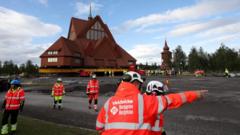
Kiruna's famous church, at risk from mining activity, is traveling along roads on giant platforms, marking a significant moment in the city’s relocation plans.
On a remarkable two-day journey, a beloved landmark in Kiruna, Sweden, is being relocated to ensure its survival amid the risk of ground subsidence due to extensive iron ore mining. The 113-year-old wooden Kiruna Church is moving a distance of 5 km (approximately 3 miles) on giant rolling platforms, with a maximum speed of 500 meters an hour.As the church begins its transition to the new city center, project manager Stefan Holmblad Johansson describes the operation as "historic" and emphasizes the meticulous planning that has gone into the extraordinary task. Kiruna is located 145 km north of the Arctic Circle, and the relocation of the church symbolizes a broader effort to move various buildings in the city to safer land.The local government is shifting buildings due to the risks posed by ground fissures after a century of mining activities. In previous years, various structures, including a historic clock tower and other buildings, were also relocated intact, while some were demolished and rebuilt in safer locations.The iron ore company, LKAB, which is also the city’s largest employer, is financing the entire relocation effort, estimated at over 10 billion Swedish krona (approximately $1 billion). Kiruna Church stands at a height of 35 m (115 ft) and weighs 672 tonnes, illustrating the logistical challenges involved in the move. The building's wide frame required roads to be specially widened, and any potential obstacles were removed prior to the relocation.Preserving the church's interior features is crucial; specially secured treasures, including a significant altar painting and a grand organ, will remain inside during transit to avoid damage. For many residents, this move is deeply sentimental. Sofia Lagerlöf Määttä reflects on cherished memories tied to the church, which has served as a community hub for generations. Vicar Lena Tjärnberg shares similar emotions, recognizing the mixture of nostalgia and hope as the church leaves its historical location for a new chapter. As the massive structure inches forward, thousands, including Sweden's King Carl Gustaf, gather to witness this rare moment of history as the church, like the community it serves, embarks on a new beginning.