In brief
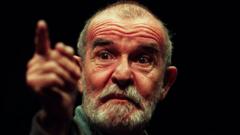
Widely regarded as one of South Africa's greatest playwrights, Athol Fugard passed away at the age of 92, leaving behind a powerful legacy through his works that confronted the injustices of apartheid.
Athol Fugard, one of South Africa's most respected playwrights, has died at the age of 92, marking the end of an era in which his impactful plays highlighted the struggles against apartheid. Fugard, who came from an Afrikaner background, spent over 70 years crafting more than 30 plays that boldly addressed the oppressive system of racial segregation in his country. Arts and Culture Minister Gayton McKenzie remembered him as "a fearless storyteller," emphasizing Fugard's role in exposing the harsh realities of apartheid.His breakthrough play, *The Blood Knot*, debuted in 1961 and became notable for featuring a mixed-race cast, an act of defiance against the apartheid regime's strict laws. This work played a crucial role in placing Fugard on the global stage, leading to international performances and adaptations. Despite facing the confiscation of his passport and harassment from authorities, Fugard remained committed to breaking racial lines through theater.Fugard's other significant works, such as *Boesman and Lena* and *Sizwe Banzi Is Dead*, further established him as a formidable voice against injustice. His portrayal of the challenges faced by mixed-race couples and the experiences of those imprisoned on Robben Island for their political beliefs offered audiences a poignant look at the impacts of apartheid. The film adaptation of his novel, *Tsotsi*, captured international acclaim, winning an Oscar in 2006.Reflecting on his legacy, Fugard expressed pride in the work born from the struggles of apartheid, stating that the end of the regime still left him with a vital purpose as a playwright. He urged future generations of writers to embrace their responsibility to critique society, echoing sentiments shared with figures like Archbishop Desmond Tutu. With Fugard's passing, South Africa honors a visionary who used the power of theater to provoke thought and inspire change.