Norwegians go to the polls on Sunday and Monday in a tight race to decide whether to continue with a Labour-led government or turn to the centre right. There are only four million voters in this founding member of NATO, which shares an Arctic border with Russia and is part of the EU's single market but not a member state.
Despite its small population, Norway has long punched above its weight on the international stage, and recent global conflicts - notably in Gaza and Ukraine - have played a significant role in the election campaign. Lately, however, attention has shifted to domestic issues, highlighting the increasing cost of living and social inequality.
Key concerns for voters include public spending, education, and infrastructure. The campaign has also featured heated discussions about the future of a 1% wealth tax and its impact on wealthy citizens, some of whom have relocated to lower-tax countries like Switzerland.
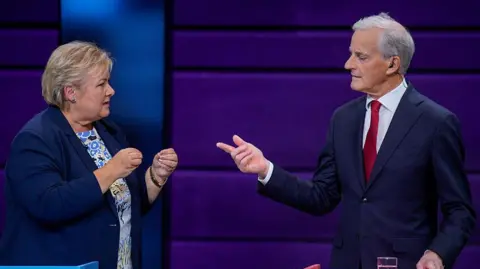
Labour, under Jonas Gahr Støre, is battling a coalition of conservatives led by former Prime Minister Erna Solberg and right-wing populist Sylvi Listhaug. Voter sentiments leading up to the election reveal Labour in the lead despite challenges, while debates have also swirled around Norway's foreign policy actions, particularly involving its sovereign wealth fund's recent decisions regarding Israeli companies amid the ongoing Gaza crisis.
Norway has a complex political structure, often resulting in coalition governments due to proportional representation, and this election may once again yield no clear majority as multiple parties vie for influence.
Despite its small population, Norway has long punched above its weight on the international stage, and recent global conflicts - notably in Gaza and Ukraine - have played a significant role in the election campaign. Lately, however, attention has shifted to domestic issues, highlighting the increasing cost of living and social inequality.
Key concerns for voters include public spending, education, and infrastructure. The campaign has also featured heated discussions about the future of a 1% wealth tax and its impact on wealthy citizens, some of whom have relocated to lower-tax countries like Switzerland.
Labour, under Jonas Gahr Støre, is battling a coalition of conservatives led by former Prime Minister Erna Solberg and right-wing populist Sylvi Listhaug. Voter sentiments leading up to the election reveal Labour in the lead despite challenges, while debates have also swirled around Norway's foreign policy actions, particularly involving its sovereign wealth fund's recent decisions regarding Israeli companies amid the ongoing Gaza crisis.
Norway has a complex political structure, often resulting in coalition governments due to proportional representation, and this election may once again yield no clear majority as multiple parties vie for influence.