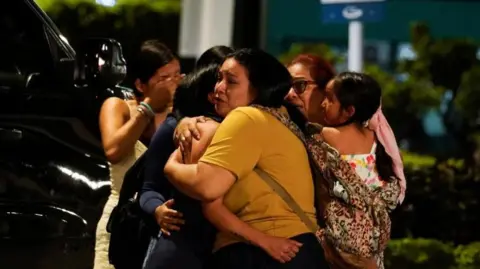
Fentanyl, a potent synthetic opioid, has become a leading concern in the U.S. drug crisis, significantly affecting communities. This dangerous substance, primarily trafficked from Mexico, finds its way into American neighborhoods, often mixed with other drugs. Street dealer "Jay," who imports fentanyl from Mexico, underscores the persistent demand despite attempts by the U.S. government to impose tariffs and crack down on trafficking.
In a striking operation captured by the BBC, Jay watched as cartel members expertly concealed thousands of fentanyl pills within the petrol tanks of vehicles to smuggle them across the border. The informants’ perspectives offer chilling insight; though some express fleeting remorse over the drugs' toll, many remain apathetic, focusing on profit and survival.
Amid these troubling exchanges, U.S. President Trump's administration's back-and-forth on tariffs aimed at curbing drug traffic has done little to dismantle the resilient fentanyl trade. The dark reality is that units of this deadly drug are being sold for significantly less than a year prior, as cartels adapt to market fluctuations.
Compounding the issue, the opioid epidemic continues to devastate lives in cities like Philadelphia, where outreach workers like Rosalind Pichardo document every overdose reversal in her notes, striving to save lives daily. Her recounting of tragic cases highlights both the vulnerability of users and the deep-seated societal issues tethered to addiction, demonstrating the persistence of demand for these life-threatening substances.
Policymakers on both sides of the border acknowledge that simply targeting the supply of fentanyl won’t eradicate the issue—addressing the underlying social and economic factors that lead to addiction is crucial. As the trade evolves, so too must the strategies employed to combat it, focusing on compassionate care rather than solely punitive measures. The narrative of fentanyl is one of danger, resilience, and an urgent call for comprehensive solutions to an ongoing public health crisis.
In a striking operation captured by the BBC, Jay watched as cartel members expertly concealed thousands of fentanyl pills within the petrol tanks of vehicles to smuggle them across the border. The informants’ perspectives offer chilling insight; though some express fleeting remorse over the drugs' toll, many remain apathetic, focusing on profit and survival.
Amid these troubling exchanges, U.S. President Trump's administration's back-and-forth on tariffs aimed at curbing drug traffic has done little to dismantle the resilient fentanyl trade. The dark reality is that units of this deadly drug are being sold for significantly less than a year prior, as cartels adapt to market fluctuations.
Compounding the issue, the opioid epidemic continues to devastate lives in cities like Philadelphia, where outreach workers like Rosalind Pichardo document every overdose reversal in her notes, striving to save lives daily. Her recounting of tragic cases highlights both the vulnerability of users and the deep-seated societal issues tethered to addiction, demonstrating the persistence of demand for these life-threatening substances.
Policymakers on both sides of the border acknowledge that simply targeting the supply of fentanyl won’t eradicate the issue—addressing the underlying social and economic factors that lead to addiction is crucial. As the trade evolves, so too must the strategies employed to combat it, focusing on compassionate care rather than solely punitive measures. The narrative of fentanyl is one of danger, resilience, and an urgent call for comprehensive solutions to an ongoing public health crisis.