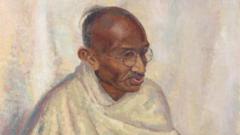
The painting remained in Leighton's family until now and is expected to stir interest from art collectors and history enthusiasts alike at its auction in July.
In 1931, Gandhi traveled to London for the second Round Table Conference to discuss constitutional reforms and India's self-governance. British artist Clare Leighton was permitted to sketch and paint Gandhi on several occasions, making this portrait unique. Leighton, who was closely involved with the independence movement via her journalist partner, caught the attention of Gandhi's contemporaries, receiving positive feedback from those who viewed the oil portrait at her 1931 exhibition in London.
Over time, the painting changed hands within the artist's family after her passing in 1989, with record of its public display only surfacing in the late 1970s. A troubling incident occurred during this time when the artwork was allegedly damaged in a knife attack, though details remain murky. Despite past controversies and criticisms surrounding Gandhi's legacy, this portrait represents a significant artifact of both art and historical importance, and it’s poised to attract attention when auctioned next month.
In 1931, Gandhi traveled to London for the second Round Table Conference to discuss constitutional reforms and India's self-governance. British artist Clare Leighton was permitted to sketch and paint Gandhi on several occasions, making this portrait unique. Leighton, who was closely involved with the independence movement via her journalist partner, caught the attention of Gandhi's contemporaries, receiving positive feedback from those who viewed the oil portrait at her 1931 exhibition in London.
Over time, the painting changed hands within the artist's family after her passing in 1989, with record of its public display only surfacing in the late 1970s. A troubling incident occurred during this time when the artwork was allegedly damaged in a knife attack, though details remain murky. Despite past controversies and criticisms surrounding Gandhi's legacy, this portrait represents a significant artifact of both art and historical importance, and it’s poised to attract attention when auctioned next month.