In brief
Recent research reveals ancient Egyptian mummies emit "woody," "spicy," and "sweet" aromas, challenging stereotypes and offering fresh perspectives on mummification and preservation.
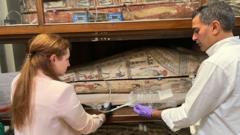
Researchers have made a fascinating discovery: even after thousands of years, ancient Egyptian mummies still smell nice! A recent study examined nine mummified bodies and found a range of pleasant scents, including "woody," "spicy," and "sweet." This finding might surprise fans of scary movies, who often imagine putting their nose near a mummy leads to unpleasant experiences. Dr. Cecilia Bembibre, part of the research team, explained the significance of these scents. During the mummification process, ancient Egyptians surrounded the deceased with aromatic oils and balms to prepare the spirit for the afterlife. This means pharaohs and nobles were literally wrapped in fragrances. The study, published in the Journal of the American Chemical Society, used a tiny tube to extract scents from the sarcophagus without disturbing the mummies—showcasing a non-destructive approach to historical research. Museums, like the Egyptian Museum in Cairo, plan to recreate these aromas for visitors, enhancing engagement with ancient culture. Furthermore, researchers noted that understanding these scents could help conservators determine how to best preserve mummies, potentially preventing decomposition. This innovative focus on smell allows us to connect emotionally with history and could enrich museum experiences worldwide. Smelling history – who knew it could be so interesting?