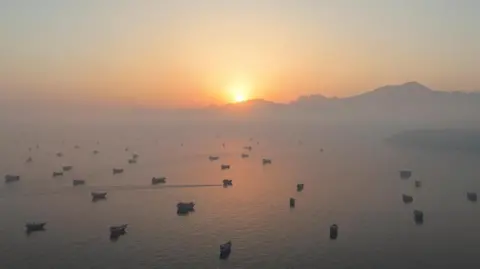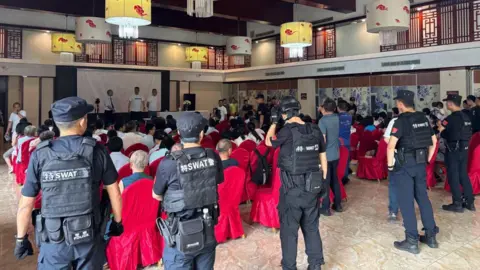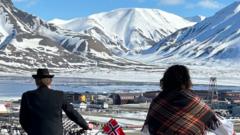
In late 2023, upon becoming the mayor of Kirkenes, Norway, Magnus Mæland welcomed three Chinese delegations eager to tap into the Arctic. "They're aiming to be a polar superpower," he explained. China, despite being thousands of miles away from the Arctic Circle, seeks to become a significant player there, attempting to establish real estate and infrastructure investments while branding itself a "near-Arctic state".
The Arctic region is heating up—literally. Climate change is rapidly melting ice, revealing rich natural resources such as critical minerals, oil, and gas, along with new maritime trade routes that could dramatically shorten shipping times between Asia and Europe. In response, China has launched a "Polar Silk Road" that proposes to make Kirkenes a key stop for trade.
However, local leaders are cautious. Mæland insists on a partnership without over-dependence on China, while Kirkenes's port director, Terje Jørgensen, aims to create a "trans-shipment port" for three continents, all without foreign land sales, emphasizing Norwegian security interests amid global tensions.
Russia, holder of 50% of the Arctic coastline, is attracting Chinese investments for resource development, bolstering military cooperation between the two nations. This partnership has raised alarms within Norway and its NATO allies, who are conducting drills and monitoring increased Russian military activities in Arctic waters.
Complicating matters further, Norway's proximity to Russia has left local residents wary, and recent incidents of espionage have heightened tensions. With local military leaders admitting distress over unresolved territorial claims and strategic maneuvers, the Arctic remains a hotspot of geopolitical rivalry.
In Svalbard, the indigenous communities voice concerns about "green colonialism" as the scramble for Arctic resources heats up. Miyuki Daorana of Greenland critiques how European powers exploit climate concerns as a pretense for encroachment on indigenous rights.
Once seen as an area for global cooperation, the Arctic's future appears to be veering towards power struggles among nation-states, raising urgent questions about sovereignty, environmental responsibility, and human rights in a dramatically changing landscape.
The Arctic region is heating up—literally. Climate change is rapidly melting ice, revealing rich natural resources such as critical minerals, oil, and gas, along with new maritime trade routes that could dramatically shorten shipping times between Asia and Europe. In response, China has launched a "Polar Silk Road" that proposes to make Kirkenes a key stop for trade.
However, local leaders are cautious. Mæland insists on a partnership without over-dependence on China, while Kirkenes's port director, Terje Jørgensen, aims to create a "trans-shipment port" for three continents, all without foreign land sales, emphasizing Norwegian security interests amid global tensions.
Russia, holder of 50% of the Arctic coastline, is attracting Chinese investments for resource development, bolstering military cooperation between the two nations. This partnership has raised alarms within Norway and its NATO allies, who are conducting drills and monitoring increased Russian military activities in Arctic waters.
Complicating matters further, Norway's proximity to Russia has left local residents wary, and recent incidents of espionage have heightened tensions. With local military leaders admitting distress over unresolved territorial claims and strategic maneuvers, the Arctic remains a hotspot of geopolitical rivalry.
In Svalbard, the indigenous communities voice concerns about "green colonialism" as the scramble for Arctic resources heats up. Miyuki Daorana of Greenland critiques how European powers exploit climate concerns as a pretense for encroachment on indigenous rights.
Once seen as an area for global cooperation, the Arctic's future appears to be veering towards power struggles among nation-states, raising urgent questions about sovereignty, environmental responsibility, and human rights in a dramatically changing landscape.