In brief
Recent trends show that RT and Sputnik are embedding themselves in new markets while Western media contracts.
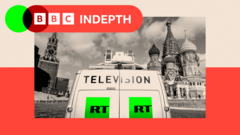
In an age of shifting global dynamics, Russia's media strategy is reshaping perceptions and narratives outside the Western sphere. In June, truck driver Javier Gallardo in Chile woke up to a shocking sight on television: instead of his usual classical music program, he was greeted with intense war images broadcasted by RT, a state-backed Russian media outlet. A perplexing switch sparked confusion among viewers when local channel Telecanal unexpectedly aired RT content without any warning. As local media restrictions tighten against Russian influence, many questions remain about Russia's overarching media strategy beyond the Western sphere.RT, short for Russia Today, has broadened its reach to various parts of the world, including Africa, Southeast Asia, and Latin America, coinciding with bans imposed in Western countries like the US and EU after Russia's invasion of Ukraine. For instance, US sanctions target RT executives for allegedly undermining public trust, but while these restrictions aim to limit its influence in the West, RT is flourishing elsewhere. With new bureaus in Algeria and Ethiopia, and training programs for journalists in the Global South, RT’s international footprint is expanding without much resistance.Experts suggest that Russia effectively tailors its messaging to resonate with audiences outside the West, where anti-American sentiments linger. Russian media is often perceived as a legitimate news source, leading to its acceptance among global viewers who seek alternative narratives to mainstream media. In addition, recent restructuring in Western media due to budget constraints has left a gap that Russia maneuvers to fill.For many in regions such as Africa, where Russia has historic ties from the Soviet era, the current media narrative fosters an inclination towards Russian perspectives. By promoting content that appeals to global disenfranchisement, RT gains ground in regions traditionally influenced by Western narratives, with much of its success hinged on offering seemingly objective news.However, the spread of Russian media isn't without controversies. RT has been criticized for distorting facts to fit specific political narratives, especially concerning events such as the annexation of Crimea and the war crimes committed in Ukraine. Among its audiences, there’s an acknowledgment of biases, yet many fail to critically engage with the underlying motivations behind RT’s storytelling.As RT expands its free broadcast services in Latin America and targets pro-Palestinian sentiments in the Middle East, the implications of Russian media are profound. By presenting alternative perspectives on global conflicts, Russia is repositioning itself as a partner rather than an adversary in the eyes of many nations. The risk remains that narratives led by Russian state media may normalize its actions and diminish global accountability. In light of these developments, experts are urging renewed focus from the West to understand and counteract the influence of Russian media, emphasizing the need to maintain a strong presence in global news discourse as the geopolitical landscape evolves.