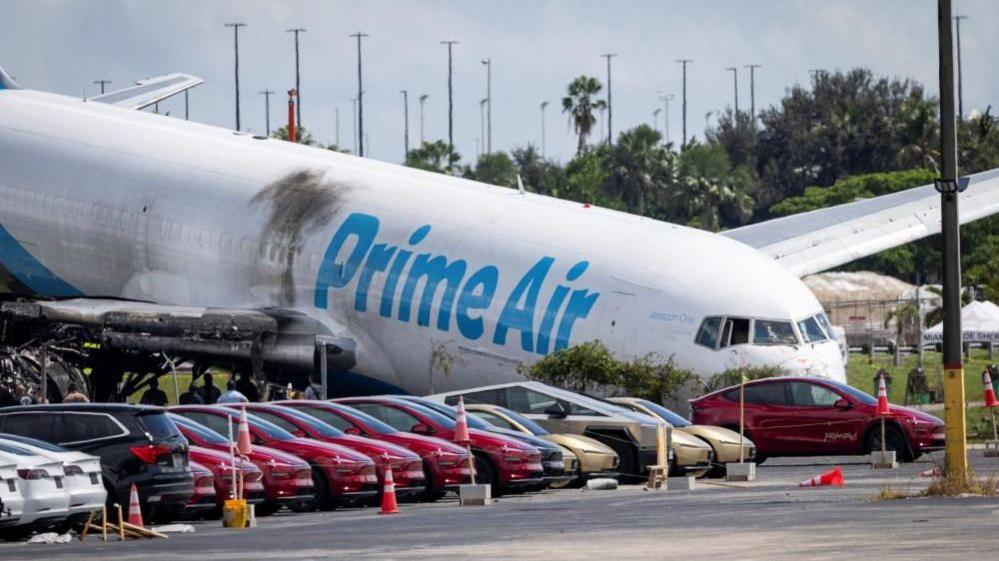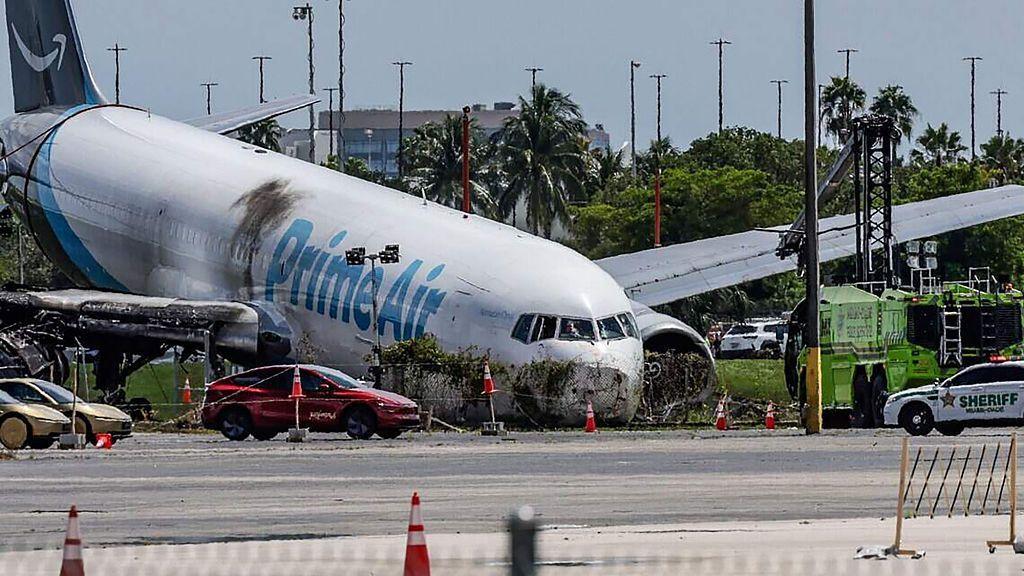
Amazon Cargo Plane Crash: Pilot Warned of Speed Before Overrun

A pilot on the Amazon Prime Air Flight 7598 at Miami International Airport said the cargo plane was speeding before it ran off the runway and hit vehicles on the on‑ground area. Flight data released by the US National Transportation Safety Board (NTSB) shows the aircraft approached the runway with a landing speed of 158 knots (292 km/h), close to the upper end of a safe approach.
The NTSB report highlights that the first pilot warned the second repeatedly in the cockpit about the plane’s “excessive speed,” yet the verbal replies were neither consistent nor clear. An automated “sink rate” and a “too low terrain” alert appeared in the cockpit cockpit‑alert system during the final minutes of the approach.
Flap deployment data in the recording shows the flaps were deployed very late in the sequence – possibly because the pilots were focused on correcting the speed, a key function of flaps during landing.
After the plane overshot the runway, it collided with a white Ford van, crossed a perimeter fence, and struck a Toyota Corolla before stopping roughly 1,300 ft (394 m) beyond the runway. Five people aboard the van – part of the plane‑cleaning crew – died, and five others were injured.
What’s Next?
The NTSB is continuing its investigation into why the aircraft overran the runway and how cockpit communications may have contributed. Investigators are also probing the timing of the automated warnings and the role of flap deployment in the crash.
For more details one can read the full NTSB update or follow the related stories: Amazon cargo plane crash details.