In brief
Skytraders’ crew flew across the Tasman Sea to the ice‑bound US station at McMurdo on 31 July, landing their Airbus A319 in total darkness at a snow runway cooled to -43 °C. The squad transferred a critically ill member on a stretcher and took him to Christchurch where treatment began. The operation, the first July rescue in Antarctic history, involved a 24‑hour runway build, a 12‑hour weather wait, and a two‑person crew working in extreme cold. Aviation experts praised the precision and cooperation of pilots, meteorologists, engineers and medical staff, noting that winter operations push aircraft capabilities to their limits. The mission highlighted the global partnership that keeps the scientific community alive even in the planet’s harshest environment.
A daring midwinter medical evacuation to Antarctica was carried out by Australian aviation crew Skytraders, landing at the US station McMurdo in darkness and at -43 °C, a record.
The Airbus A319, dubbed Snowbird 1, took off from Hobart on 31 July and touched down on a 3‑km runway that had been groomed overnight by ground crews under extreme wind and sub‑zero temperatures.
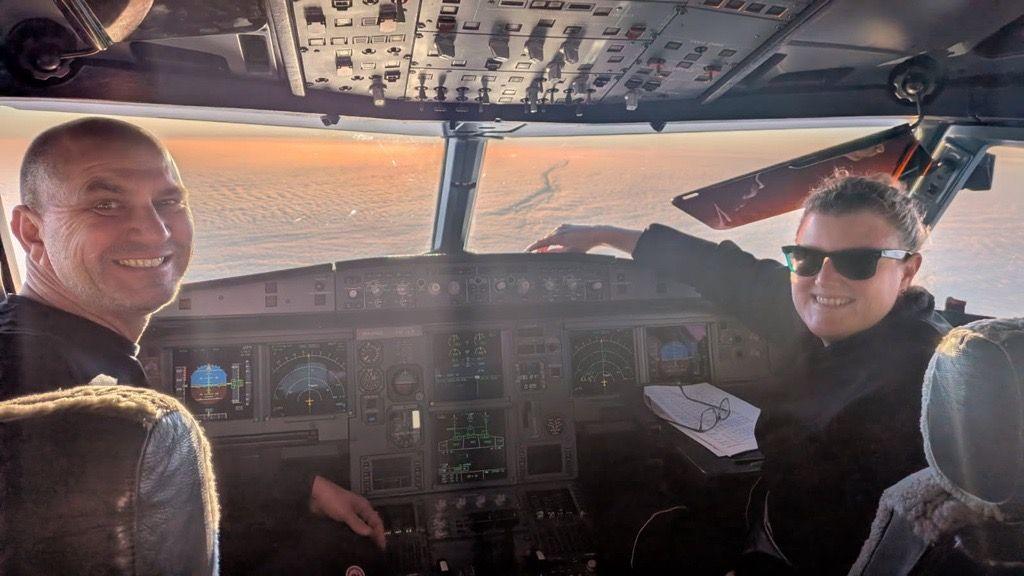
Captain Louise Robertson, partner of pilot Rod Robertson, recalled that the flight crew had only one hour on the ground before taking off again for Christchurch, where the ill member was treated and is now recovering well.
Skytraders explained that the aircraft had to be specially configured overnight with a stretcher, a process that took 24 hours, and the launch was delayed another 12 hours due to a snowstorm that blocked the runway on the first day.
’Every Antarctic mission demands absolute precision,’ said Captain Al Wallach. ‘This operation tested the limits of the aircraft in some of the coldest conditions ever encountered by commercial pilots.’
Emma Campbell, head of the Australian Antarctic Division, said the mission “highlights both the capability of our people and the strong partnerships that underpin Antarctic programmes around the world.”
Skytraders previously helped evacuate a US Antarctic Program member in March 2020, when temperatures were slightly warmer at -30 °C. This latest rescue is the first of its kind to take place in July and to be completed entirely in darkness.
The story showcases innovation in aviation, teamwork across countries and the relentless pursuit of life‑saving solutions even when day is a distant memory.