In brief
According to a report by the US National Transportation Safety Board (NTSB), Boeing was aware of flaws in the engine mounting assembly related to the MD-11F cargo plane that crashed in Kentucky last year, resulting in 15 fatalities. Despite prior knowledge, Boeing deemed the issue non-critical. Investigators have highlighted recurring fatigue fractures in key components that could endanger future flights.
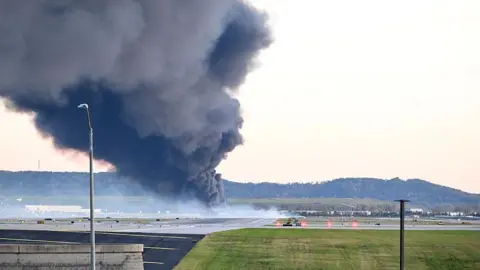
An aircraft that crashed in flames in Kentucky in November had a structural flaw that had been identified by Boeing on similar planes 15 years ago, according to investigators.The MD-11F freighter operated by UPS crashed after one of its engines separated from the wing as it was preparing to take off from Louisville, briefly lifting off before derailing into an industrial area. The accident claimed the lives of 15 individuals, including three crew members and 12 people on the ground.In an update report, the US National Transportation Safety Board (NTSB) revealed that cracks found in the engine mounting assembly had previously occurred on several other aircraft. At the time, Boeing concluded that the issue 'would not result in a safety of flight condition.'The MD-11 is a relatively elderly aircraft design produced originally by McDonnell Douglas and was last manufactured in 2001, although Boeing continues to provide parts and service support.Post-accident, the NTSB highlighted cracks in the engine attachment mechanism, further describing fractures due to fatigue in critical bearings. It noted that failures of the same part had been observed on four occasions impacting three different aircraft, with Boeing alerting operators through non-binding service letters in 2011.Tim Atkinson, an aviation safety consultant, expressed concerns over Boeing's evaluation of the potential safety impacts of the flaw, emphasizing that it's a crucial part of the engine mounting mechanism. In response, Boeing reiterated its commitment to cooperating with the NTSB's ongoing investigation, extending condolences to the victims' families.The NTSB continues its inquiry into the incident and has not yet drawn firm conclusions regarding the crash.