Canada has made headlines with a surprising new trade deal that shifts its focus away from the United States, solidifying its relationship with China. Prime Minister Mark Carney emphasized that this agreement reflects a practical approach to international relations, stating, 'We take the world as it is, not as we wish it to be.'
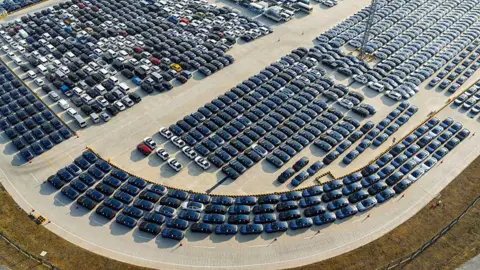
The deal, finalized on Friday, will ease tariffs on Chinese electric vehicles imported into Canada, dropping rates from 100% to just 6.1% for a specified quota of vehicles. This move responds to China's pledge to reduce retaliatory tariffs on essential Canadian agricultural products, including canola seeds, lobsters, and peas.
Experts suggest that this represents a significant pivot in Canada’s foreign relations, driven by mounting uncertainty surrounding its largest trading partner, the US. Eric Miller, a Washington-based trade adviser, noted that Carney is asserting Canada’s independence rather than waiting for US decisions.
The implications of this deal are creating a stir back home; while some Canadian leaders, like Saskatchewan Premier Scott Moe, have welcomed the reduction of tariffs as beneficial news for farmers, others like Ontario Premier Doug Ford are less enthusiastic. Critics argue that lowering tariffs might jeopardize local auto manufacturing, inviting a wave of cheaper Chinese electric vehicles at the potential cost of Canadian jobs.
The ongoing adjustments in trade policies reflect both nations' shifting dynamics and Canada's efforts to bolster its economic interests in an increasingly unpredictable global market. With the world's largest electric vehicle market now more accessible, Canada aims to position itself strategically within this evolving trade landscape.