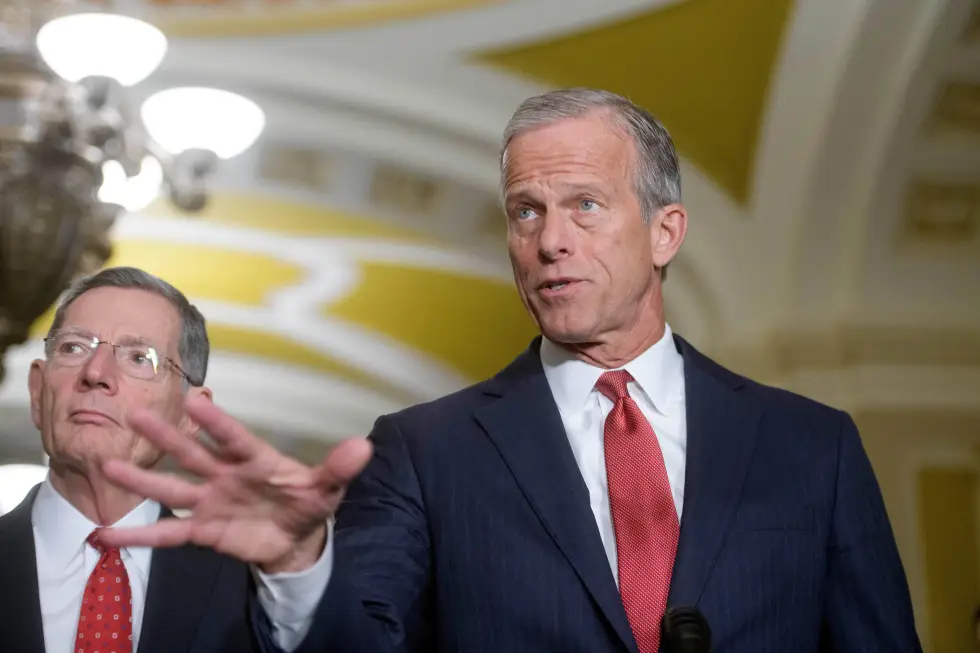
WASHINGTON (AP) — A shutdown for the Department of Homeland Security appeared certain Thursday as lawmakers in the House and Senate were set to leave Washington for a 10-day break and negotiations with the White House over Democrats’ demands for new restrictions had stalled.
The White House and Democrats have traded offers in recent days as the Democrats have said they want curbs on President Donald Trump’s broad campaign of immigration enforcement. They have demanded better identification for U.S. Immigration and Customs Enforcement and other federal law enforcement officers, a new code of conduct for those agencies, and more use of judicial warrants, among other requests.
Thune would not say what those concessions were, though he acknowledged the sides were 'a long ways toward a solution' even as the Senate is scheduled to vote again on the DHS funding. Democrats did not respond publicly to the White House offer, but Democratic senators voted against a funding bill for the department before leaving town, meaning the funding will expire Saturday without further action. The bill was rejected, 52-47, short of the 60 votes needed for passage.
Lawmakers were on notice to return to Washington if the two sides struck a deal to end the expected shutdown. Democrats say they need to see real changes before they will support DHS funding. Americans want accountability and 'an end to the chaos,' Senate Democratic leader Chuck Schumer of New York said Thursday before the vote. Schumer emphasized that it was not enough that the administration had announced an end to the immigration crackdown that led to thousands of arrests.
The Democrats insist on legislation to rein in ICE and end the violence, or they warn that administration actions 'could be reversed tomorrow on a whim.'
Negotiations are also hindered by disputes over judicial warrants and a demand for more stringent procedures for law enforcement. Schumer and House Democratic leader Hakeem Jeffries have outlined a list of demands aimed at changing how immigration enforcement is carried out. While some Republicans have acknowledged the need for new restrictions, the party has largely resisted the Democrats' proposals.
The broader implications of a DHS shutdown may not immediately affect immigration enforcement but could strain other essential services like those provided by FEMA and the TSA, which may struggle for resources in a prolonged shutdown.
The White House and Democrats have traded offers in recent days as the Democrats have said they want curbs on President Donald Trump’s broad campaign of immigration enforcement. They have demanded better identification for U.S. Immigration and Customs Enforcement and other federal law enforcement officers, a new code of conduct for those agencies, and more use of judicial warrants, among other requests.
Thune would not say what those concessions were, though he acknowledged the sides were 'a long ways toward a solution' even as the Senate is scheduled to vote again on the DHS funding. Democrats did not respond publicly to the White House offer, but Democratic senators voted against a funding bill for the department before leaving town, meaning the funding will expire Saturday without further action. The bill was rejected, 52-47, short of the 60 votes needed for passage.
Lawmakers were on notice to return to Washington if the two sides struck a deal to end the expected shutdown. Democrats say they need to see real changes before they will support DHS funding. Americans want accountability and 'an end to the chaos,' Senate Democratic leader Chuck Schumer of New York said Thursday before the vote. Schumer emphasized that it was not enough that the administration had announced an end to the immigration crackdown that led to thousands of arrests.
The Democrats insist on legislation to rein in ICE and end the violence, or they warn that administration actions 'could be reversed tomorrow on a whim.'
Negotiations are also hindered by disputes over judicial warrants and a demand for more stringent procedures for law enforcement. Schumer and House Democratic leader Hakeem Jeffries have outlined a list of demands aimed at changing how immigration enforcement is carried out. While some Republicans have acknowledged the need for new restrictions, the party has largely resisted the Democrats' proposals.
The broader implications of a DHS shutdown may not immediately affect immigration enforcement but could strain other essential services like those provided by FEMA and the TSA, which may struggle for resources in a prolonged shutdown.