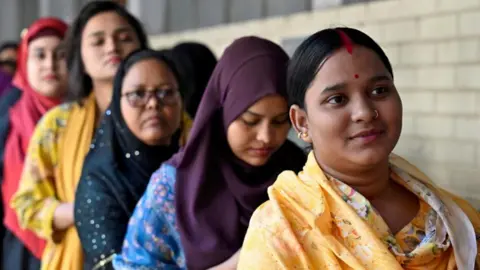
Votes are being counted in Bangladesh after its first election since student-led protests ousted prime minister Sheikh Hasina in 2024. More than 2,000 candidates are vying for 300 elected seats in parliament, though none from the banned Awami League of Hasina, who fled after 15 years in power, following a brutal security crackdown in which hundreds of protesters were killed. The election entails a contest between the centre-right Bangladesh Nationalist Party (BNP) and a coalition led by the Islamist Jamaat-e-Islami, both of which have historical significance in the nation’s politics. Amidst a backdrop of high hopes for a return to democracy, voters expressed a sense of choice for the first time in years, following overwhelming dissatisfaction with past elections characterized by widespread fraud. For many, this election represents a referendum on what lies ahead for Bangladesh's political future, with a significant turnout expected amongst the younger population. The interim leader, Muhammad Yunus, has declared that the country has 'ended the nightmare and begun a new dream,' indicating the momentous nature of this political shift.
Historic Election in Bangladesh: A New Dawn After Protests
Historic Election in Bangladesh: A New Dawn After Protests
After years of suppression, a significant election in Bangladesh has resulted in new political dynamics, promising a shift toward democracy. Young voters play a key role in shaping the future.
Bangladesh is witnessing its first election since student-led protests ousted the longtime leader, Sheikh Hasina, in 2024. With over 2,000 candidates vying for parliamentary seats, this election marks a pivotal moment of change. Voter turnout reached 49% by midday, and the spotlight is on the Bangladesh Nationalist Party (BNP) and a newly formed coalition led by the Islamist Jamaat-e-Islami. Results are set to be announced soon, with hopeful expectations for a democratic reset in the nation.