In brief
The Democratic Republic of Congo (DRC) has made a significant decision to accept migrants being deported from the United States. This agreement, which took effect this month, aims to provide a temporary reception system for those arriving in Kinshasa, while ensuring that no Congolese nationals will be sent back. The US will support this initiative logistically and financially, although the total number of deportees to be accepted remains undisclosed. This move aligns with DRC's commitment to international solidarity and the rights of migrants, amidst growing international scrutiny of such deportation policies.
The Democratic Republic of Congo has agreed to accept migrants deported from the US who are not themselves Congolese under a deal effective from this month, officials said.
The Ministry of Communication stated that a temporary reception system had been set up and facilities to accommodate arrivals have been designated in the capital, Kinshasa.
Logistical and technical support will be provided by the US, and the Congolese government will bear no financial cost for the scheme.
While the government did not specify how many deportees it would accept, it noted that the US has already sent deportees to various African nations as part of its crackdown on immigration.
Concerns linger about the possibility of returned migrants facing persecution in their home countries, but Congolese officials emphasized that there are no plans for such transfers.
Emphasizing their commitment to human dignity, the DRC's decision to accept what are termed third-country migrants illustrates international solidarity and the protection of migrants' rights, per the government’s statement.
However, the Congolese authorities clarified that this scheme does not represent a permanent relocation mechanism or an outsourcing of migration policies.
The BBC reached out to the US State Department and Department of Homeland Security for further comment but received no response at this time.
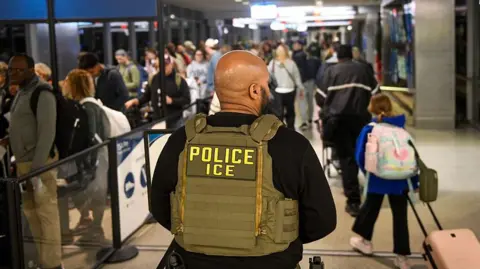
The Trump administration has been known for its hard-line stance on immigration, having deported dozens to third countries since taking office in January 2026, which has drawn criticism from human rights advocates concerning its legality.
DR Congo joins a list of African nations, including Eswatini, Ghana, and South Sudan, in receiving deportees from the US. Recently, eight individuals from various countries were deported to Uganda.
As US involvement in DRC grows, the country is negotiating a minerals deal for access to significant reserves of key metals like cobalt and lithium. Additionally, under Trump's administration, peace efforts have been facilitated between DRC and Rwanda, although implementation of these agreements remains challenging.