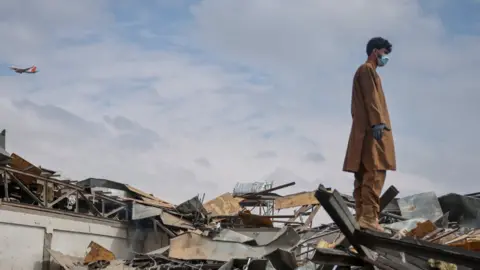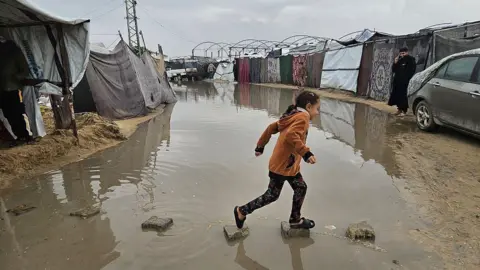
More than 800,000 Gazans are at risk from flooding, the UN warns, as a powerful winter storm sweeps through the region. Heavy rain has deluged camps and led to several buildings collapsing, worsening the plight of those already suffering from displacement.
A mother of six, Ghadir al-Adham, shared her heartbreak as her family lives in a tent filled with water, longing for proper housing. Every day I sit and cry for my children, she expressed, highlighting the urgent needs of families struggling through humanitarian crises.
Currently, Gaza is stuck in the first phase of Donald Trump's peace initiative, with its territory divided between conflicting factions, and reconstruction stalled. The American-imposed ceasefire has not improved living conditions but has instead layered additional difficulties on its citizens.
As peace talks remain stalled amidst the search for Ran Gvili, Israel's last hostage from recent conflicts, both sides find themselves hesitating to move forward on a peace deal. Israeli Prime Minister Benjamin Netanyahu insists that all hostages must be accounted for before substantial progress can be made.
Hamas has denied allegations of withholding hostages, while families of the captured express their desperate hopes for resolution. Their concerns are compounded by the flooding, which threatens their already precarious living situations.
In an effort to address the humanitarian crisis, Israel may begin clearing rubble in Gaza to prepare for temporary housing, but the approach has sparked controversy, as many Gazans resist living under Israeli control.
The lack of progress on both the political and humanitarian fronts leaves many Gazans in anticipation of a future that remains uncertain. With time ticking away, the need for intervention and resolution becomes increasingly critical.