A sperm donor who unknowingly harbored a genetic mutation that dramatically raises the risk of cancer has fathered at least 197 children across Europe, a major investigation has revealed.
Some children have already died and only a minority who inherit the mutation will escape cancer in their lifetimes.
The sperm was not sold to UK clinics, but the BBC can confirm a very small number of British families, who have been informed, used the donor's sperm while having fertility treatment in Denmark.
Denmark's European Sperm Bank, which sold the sperm, said families affected had their deepest sympathy and admitted the sperm was used to make too many babies in some countries.
The investigation was conducted by 14 public service broadcasters, including the BBC, as part of the European Broadcasting Union's Investigative Journalism Network.
The sperm came from an anonymous man who was paid to donate as a student, starting in 2005. His sperm was then used by women for around 17 years.
He is healthy and passed the donor screening checks. However, the DNA in some of his cells mutated before he was born.
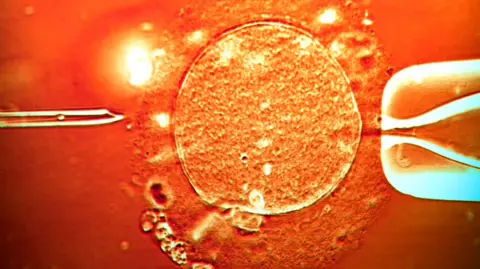
This damaged the TP53 gene, crucial for preventing cells from turning cancerous. Most of the donor's body does not contain the dangerous form of TP53, but up to 20% of his sperm does.
Children created from affected sperm will inherit the mutation in every cell, increasing their risk of developing cancer to up to 90%, particularly childhood cancers and breast cancer later in life.
This case has prompted discussions about the need for stricter limits on sperm donation and better screening practices to safeguard future generations.