Kenya's parliament has accused British soldiers of decades of sexual abuse, killings, human rights violations and environmental destruction while training in the country.
The report detailed harrowing testimony from communities in Laikipia and Samburu counties, near the military training bases.
The British soldiers are accused of evading accountability by refusing to cooperate with the parliamentary investigation.
The UK High Commission in Kenya said it regretted that its submission was not reflected in the report's conclusions and affirmed its readiness to investigate the allegations 'under our jurisdiction fully, once evidence is provided'.
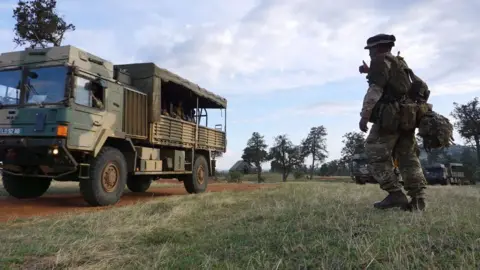
For decades, troops from the British Army Training Unit in Kenya (Batuk) have been training in central Kenya but their presence has long attracted controversy, with soldiers accused of misconduct and rights abuses.
More than 1,000 Kenyan soldiers receive British training each year, while thousands of UK troops are sent to Kenya for training exercises.
In a 94-page report following a two-year inquiry, Kenya's parliamentary Committee on Defence, Intelligence and Foreign Relations accused Batuk of continued ethical breaches, rights violations and environmental negligence, as well as employment and labour concerns.
Among the worst cases was the 2012 murder of Agnes Wanjiru, whose body was found in a hotel septic tank in the central garrison town of Nanyuki, nearly three months after she was alleged to have spent an evening with British soldiers.
Witnesses also described instances of public indecency by soldiers, including exposing themselves in social venues and town centres, often involving intoxication, disorderly behaviour, and in some cases, violent or sexually aggressive conduct.
The investigating panel said Batuk had 'persistently' declined to appear before the committee and instead 'invoked claims of diplomatic immunity'.
The committee recommended the military agreement be amended to introduce a visiting forces code of conduct, zero-tolerance rules for gender-based violence, environmental obligations, and civilian oversight.