In brief
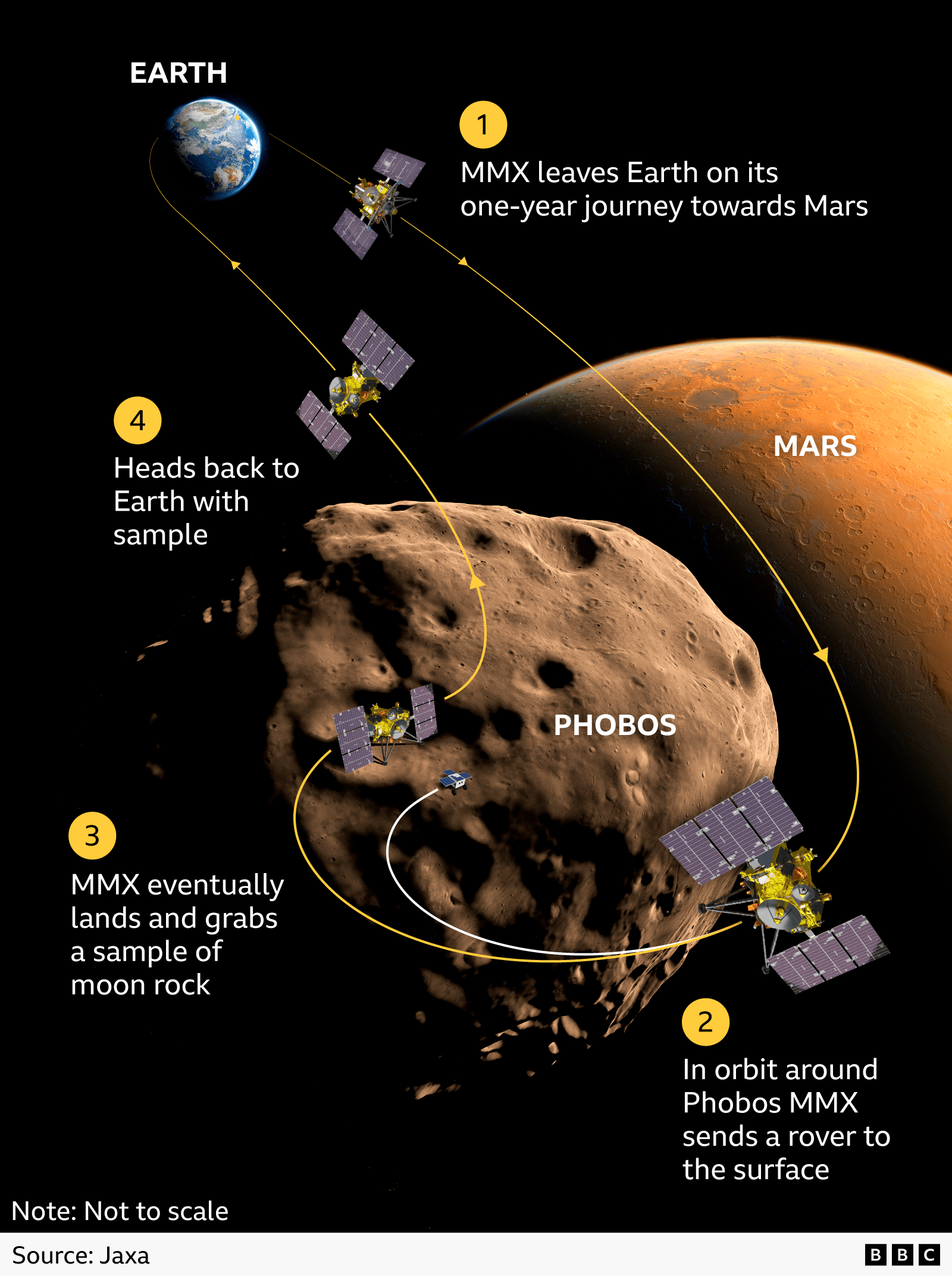
The JAXA‑led MMX mission has blasted off from Japan on a journey to Mars’ smaller moon, Phobos. After a daring rover lands on the moon’s patchy surface, the craft will scoop 10 g of dust and send it back to Earth for labs. The tiny sample will help scientists decide whether Phobos formed from a giant collision or was lured by Mars’ gravity, and may even carry pieces of Mars itself. MMX completes a series of attempts to bring Martian material home, after earlier U.S. and Chinese plans stalled.
Get ready, space fans! A brand‑new rocket from Japan has just leapt into orbit, carrying Japan’s MMX craft to the tiny, potato‑shaped moon of Mars, Phobos. The mission’s bold job? Grab a scrap of lunar dust and bring it back here on Earth for science in 2031.
Why the hype – if MMX succeeds, it will be the first time we see material from Mars’s moons in a lab. That material could finally answer a long‑standing mystery: did Phobos form from a gigantic impact on Mars or was it a wandering asteroid that was snared by the Red Planet’s gravity?
Mission timeline – the craft is arriving at Phobos in August 2027. A tiny rover will explore the moon’s cliffs, then the main lander will press its robotic arm against the surface and scoop 10 grams of dust. That 10‑gram sample will be sealed in a capsule that will blaze back to Earth in 2031, landing in the Woomera desert of South Australia.
Phobos is tiny – about 20 km across – and its weak gravity makes landing a rover a big engineering win. Only a few megajoules of propellant will choose where the craft touches down, so every second is a lesson in precision.
Scientists say the dust may also contain bits harvested from Mars during past impacts. If so, the sample could give us the first hands‑on peek at Mars’s own composition, something that meteorites we find here on Earth can’t provide because they’re yanked into space and then hit by Earth’s atmosphere.
MMX is part of a long line of ideas. Earlier this week the U.S. Perseverance rover on Mars was collecting rock in canisters for a planned but now‑scrapped Mars Sample Return mission. And China is preparing its own lunar‑analysis mission for 2028 with a 2031 return target.
Next up for fans: once MMX lands, watch for the rover’s photo‑logs, the moment the robotic arm grabs the dust, and the dramatic launch of the capsule back to Earth. Follow SnapScope for quick video summaries, fun challenges like “Guess the moon’s shape” and live polls on what you think Phobos might be.