In brief
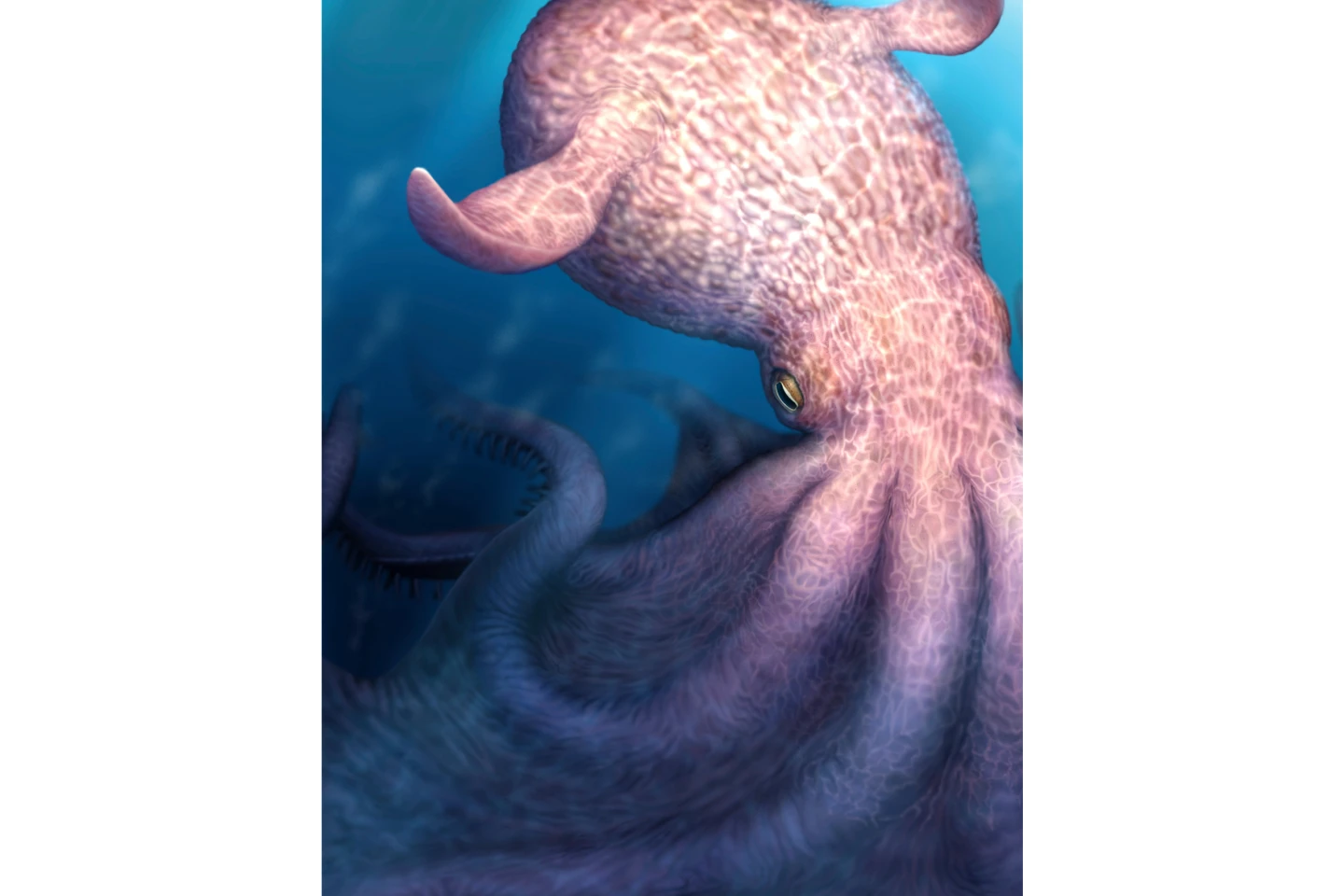
A new study suggests that 100 million years ago, giant octopuses could have been the most formidable predators in the oceans, rivaling carnivorous marine reptiles. Research on the jaws of ancient octopus fossils shows they could grow up to 62 feet long, much larger than modern octopuses. The findings, which highlight their possible predatory nature, are paving the way for further exploration of the ancient marine ecosystem.
NEW YORK (AP) — Imagine a time when the seas were ruled not just by sharp-toothed sharks but by massive, kraken-like octopuses. A new study analyzing fossilized jaws suggests these ancient octopuses, dating back 100 million years, could grow to over 60 feet (18 meters) in length, challenging the dominance of marine reptiles like mosasaurs. Paleontologists, using innovative techniques like digital fossil mining, have uncovered these jaw fossils in Japan and Canada. While octopuses are often overlooked as top predators due to their soft bodies' poor fossil record, the tough beaks of these ancient creatures were powerful enough to crush prey like shells and bones. The research, published in the journal Science, raises exciting questions about ancient marine life and the role of these giant octopuses in the ecosystem. The study highlights significant wear on the largest jaws, indicating a history of fierce feeding. This newfound information opens the door for further exploration into how these incredible creatures interacted with their environment and other predatory species.