In brief
Amidst the impeachment saga, South Korea's President Yoon Suk Yeol incites fears of communism as his supporters rally, highlighting the influence of historical tensions with North Korea and the growing suspicion of China.
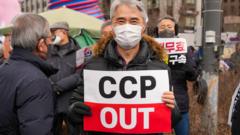
In the heart of South Korea, a scene plays out that echoes the past. Young pharmacy student Shin Jeong-min stands outside the Constitutional Court, anxiously awaiting the arrival of impeached President Yoon Suk Yeol. As Yoon testifies, she joins a chorus of supporters chanting demand for his release, fueled by fears of a leftist takeover in alliances with North Korea.Shin, just 22, represents a demographic that blends youthful energy with historical paranoia historically held by older generations. While many elderly Koreans remember the turmoil of the Cold War; the current narrative pushed by Yoon's conservative supporters has gripped even those who previously viewed communism with indifference. The rhetoric hints at dangers that loom large, with Yoon asserting that "North Korean communist forces" have infiltrated opposition parties, a claim steeped in controversy and lacking substantiation.The anti-communist fervor is a revival of sentiments once exploited during South Korea's military dictatorships, where accusations of communism served as a tool for repression. Today, Yoon's conservative People Power Party presents a stark contrast to the left-leaning Democratic Party, which advocates for engagement with North Korea over threats of military might. As fears of communist ideology are stoked, younger generations—previously untouched by the shadows of tyranny—are increasingly receptive to these ideas. Many now view opposition figures as slap-happy sympathizers with Pyongyang, all while new allegations of electoral manipulation create a backdrop of mistrust that Yoon cleverly navigates.At rallies, chants evolve from calls against election fraud to demanding the expulsion of the "Chinese Communist Party." Supporters express a newfound belief that external forces threaten South Korea's political integrity, reinforcing a sense of urgency that Yoon's extreme measures—like declaring martial law—are necessary. The public mood is shifting, but experts caution against the long-term impact of these views, likening Yoon's supporters’ fervor to a cult-like affiliation. As this anti-communist crusade progresses, South Korea grapples with a legacy of division that threatens its democratic foundations.