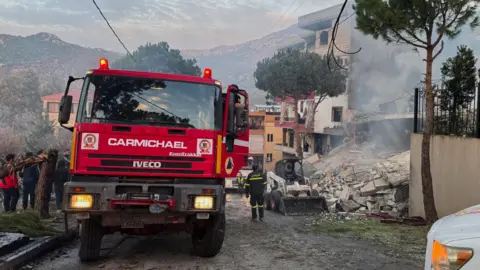
In a dramatic escalation of hostilities, Israel has accused Iran of violating a cease-fire established earlier this week following extensive military operations between the two nations. Hours after the announcement, Israel stated that additional missile strikes were launched from Iran, prompting military leaders to warn of potential retaliation.
The cease-fire, facilitated by U.S. President Trump, aimed to halt nearly two weeks of intense conflict, during which both nations had suffered considerable casualties and damages. Israel alleged that at least four missiles fired from Iran struck populated areas in Israel, leading to fatalities and injuries, with many people forced into bomb shelters.
Iran, however, has denied these accusations, with state media claiming that no missiles were fired after the truce went into effect. This denial has fueled uncertainty about the stability of the cease-fire and raised concerns regarding the likelihood of further escalations.
The fragile peace seems to hang in the balance as both countries engage in back-and-forth exchanges of military actions. While the initial announcement of the cease-fire was met with cautious optimism from world leaders, recent strikes have complicated hopes for a lasting resolution.
Global reactions have varied, with leaders like France’s Emmanuel Macron welcoming the cease-fire but cautioning against the tenuous situation, while the Kremlin expressed hope for a sustainable peace. As the situation continues to unfold, the world watches closely, hoping for de-escalation amidst ongoing tensions in the region.