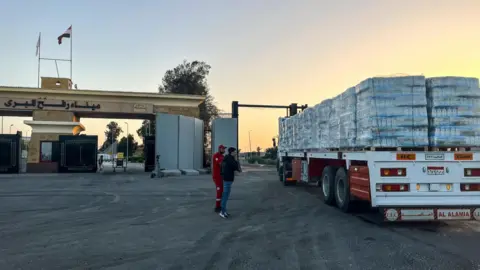
Israel has announced it will open the key Rafah crossing between Gaza and Egypt in the coming days to allow Palestinians to leave the territory.
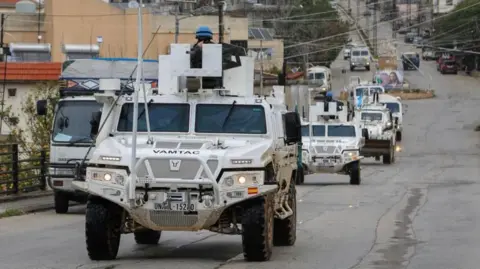
Israeli military body Cogat said exits would be facilitated through coordination with Egypt, following security approval by Israel and under the supervision of the European Union mission. It added that this would be similar to the mechanism that operated in January, when the crossing opened during a previous ceasefire.
An Israeli security official said it was an expression of Israel's support for the current ceasefire with Hamas, which began seven weeks ago.
However, Egypt denied it was coordinating with Israel to reopen the Rafah crossing.
The State Information Service cited an official Egyptian source as saying that if an agreement is reached to open the crossing, it will be in both directions, to enter and exit the Gaza Strip, in accordance with the plan of US President Donald Trump. Trump's 20-point Gaza peace plan states that opening the Rafah crossing in both directions will be subject to the same mechanism implemented under the January ceasefire deal.
The crossing has been mostly closed since May 2024, when the Palestinian side was seized by Israeli forces. Before then, it was the main exit point for Palestinians and a key entry point for humanitarian aid.
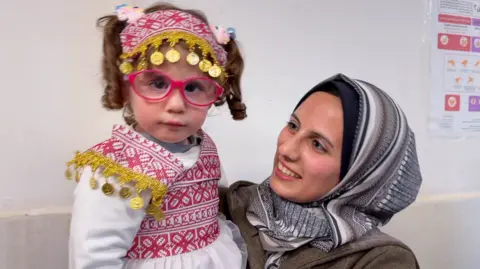
Currently, at least 16,500 severely ill or injured Palestinians in need of lifesaving medical treatment abroad are waiting to be evacuated from Gaza, according to the World Health Organization.
Israel's Haaretz newspaper reported that Palestinian Authority forces would assist in operating the reopened Rafah crossing alongside the EU's Border Assistance Mission.
Israeli Prime Minister Benjamin Netanyahu has previously blocked the reopening of the crossing due to hostages held by Hamas and other groups in Gaza.
On Wednesday, the military wing of Palestinian Islamic Jihad stated it had recovered the body of a hostage in northern Gaza, to be transferred to Israeli forces later.
The two dead hostages still in Gaza were among the 251 people abducted by Hamas on October 7, when around 1,200 people were killed.
The situation remains complex, with ongoing discussions about evacuations and hostage negotiations intertwined with daily humanitarian needs in the region.