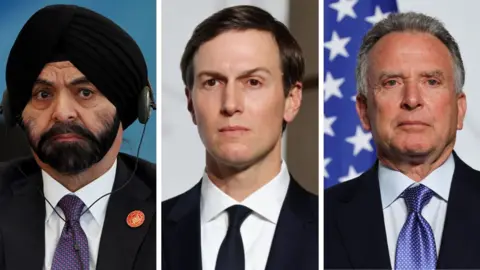
The White House has announced the first members of its Gaza 'Board of Peace', a move that has sparked criticism for resembling a colonial approach lacking in Palestinian voices. Composed primarily of Americans, including Jared Kushner and Marco Rubio, the board lacks any Palestinian representatives, intensifying debates over the plan's legitimacy.
One of the key components of the initiative is the creation of two central boards: a 'founding Executive Board' focused on investment and diplomacy, and a 'Gaza Executive Board' tasked with overseeing local operations through a newly formed National Committee for the Administration of Gaza. However, critics point to the absence of Palestinian leaders and suggest that the boards may struggle to gain the trust and support of the local population.
Sir Tony Blair's involvement adds another layer of complexity due to his controversial history related to the Iraq war and Britain's colonial legacy in the region. Despite the criticism, the plan has gained international attention, with leaders vowing to support its momentum towards peace and stability.
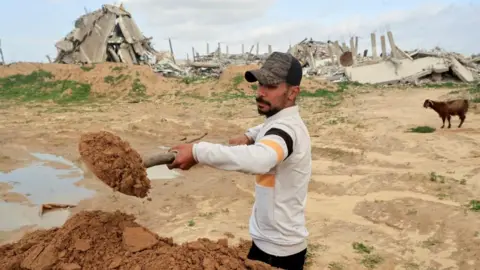
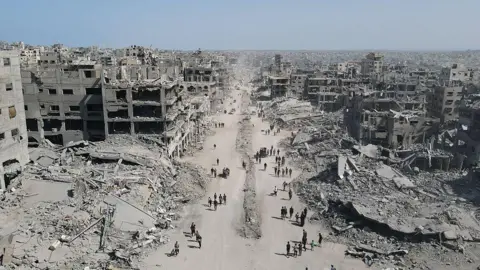
While the initiative is underway, Gaza continues to face immense challenges. The UN estimates that 80% of buildings in the region have been either destroyed or damaged, and aid organizations are grappling with restrictions, complicating the delivery of humanitarian assistance. These ongoing crises pose significant hurdles for the new board, which aims to drive change and improve living conditions for Palestinians amidst a fragile ceasefire.
As the situation evolves, the effectiveness of the 'Board of Peace' will ultimately hinge on its ability to foster genuine governance and deliver essential services while addressing the core issues of the Israeli-Palestinian conflict.