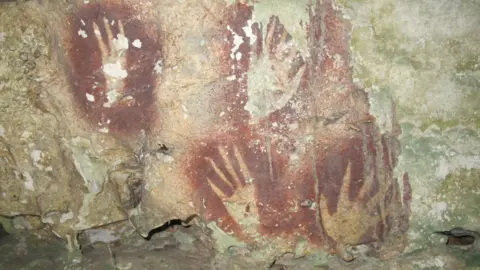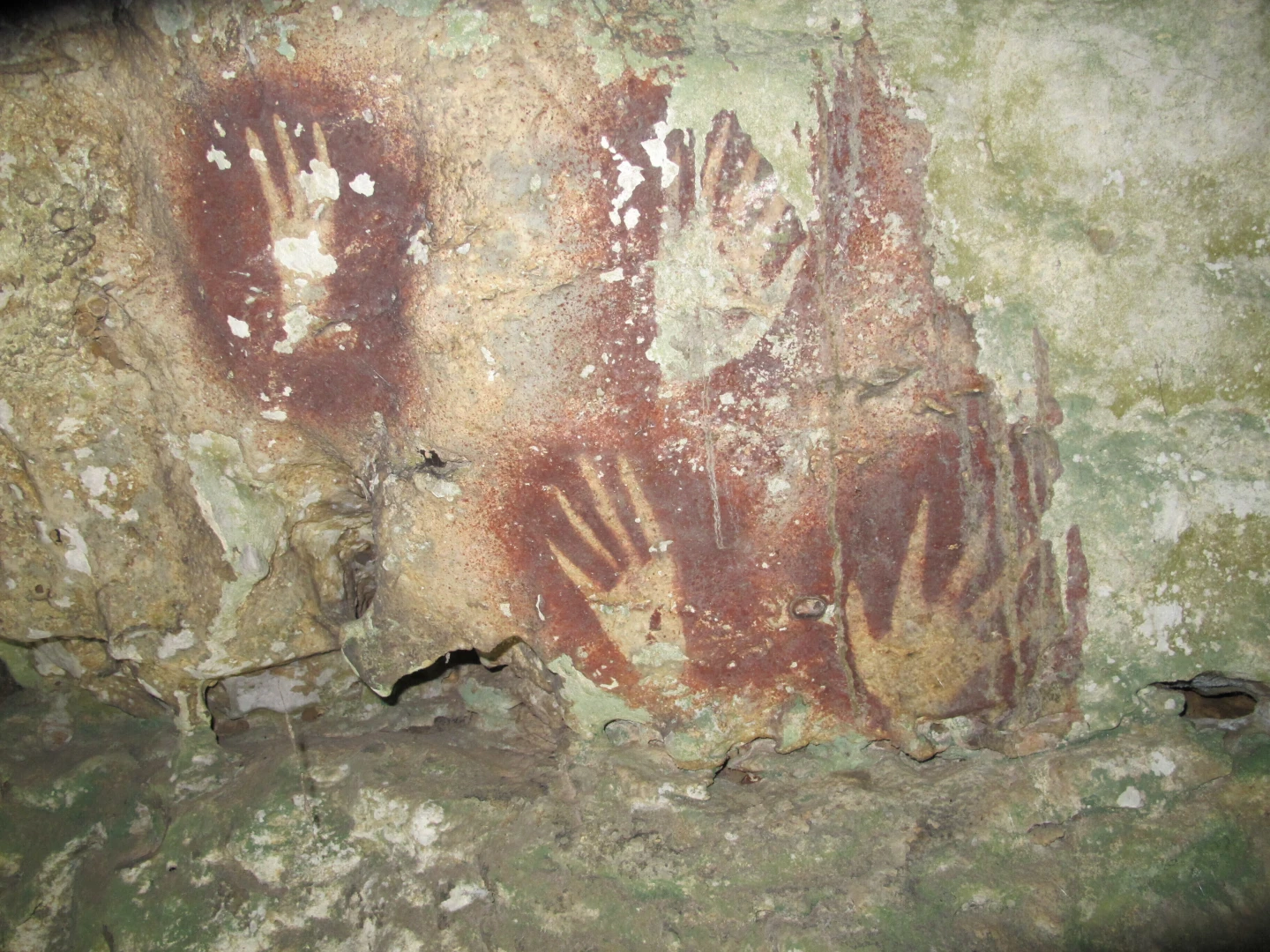
NEW YORK (AP) — Handprints on cave walls in a largely unexplored area of Indonesia may be the oldest rock art studied so far, dating back to at least 67,800 years ago. The tan-colored prints analyzed by Indonesian and Australian researchers on the island of Sulawesi were made by blowing pigment over hands placed against the cave walls, leaving an outline. Some of the fingertips were also tweaked to look more pointed. This prehistoric art form suggests the Indonesian island was home to a flourishing artistic culture. To determine how old the paintings were, researchers dated mineral crusts that had formed on top of the art.
Upon learning about the new study, independent paleoanthropologist Genevieve von Petzinger expressed her excitement. It fits everything I'd been thinking, she said.
The discovery aligns with the understanding that Indonesia hosts some of the world’s earliest cave drawings. Extensive research into ancient art across the globe has revealed various representations, including markings on bones and stones over hundreds of thousands of years. While previous markings in South Africa date back to about 73,000 years, the handprints from southeastern Sulawesi represent a more complex tradition of rock art.
The details of these handprints, especially the modified fingertips, suggest they were created by humans. Although it's not clear which ancient group made them, hypotheses include the Denisovans, who lived in the region, or early modern humans venturing out of Africa. Other cave art found in the vicinity dates back only around 4,000 years.
For us, this discovery is not the end of the story. It is an invitation to keep looking, said study author Maxime Aubert from Griffith University. Future studies may reveal even older artistic traditions, enhancing our understanding of early human creativity.
Upon learning about the new study, independent paleoanthropologist Genevieve von Petzinger expressed her excitement. It fits everything I'd been thinking, she said.
The discovery aligns with the understanding that Indonesia hosts some of the world’s earliest cave drawings. Extensive research into ancient art across the globe has revealed various representations, including markings on bones and stones over hundreds of thousands of years. While previous markings in South Africa date back to about 73,000 years, the handprints from southeastern Sulawesi represent a more complex tradition of rock art.
The details of these handprints, especially the modified fingertips, suggest they were created by humans. Although it's not clear which ancient group made them, hypotheses include the Denisovans, who lived in the region, or early modern humans venturing out of Africa. Other cave art found in the vicinity dates back only around 4,000 years.
For us, this discovery is not the end of the story. It is an invitation to keep looking, said study author Maxime Aubert from Griffith University. Future studies may reveal even older artistic traditions, enhancing our understanding of early human creativity.