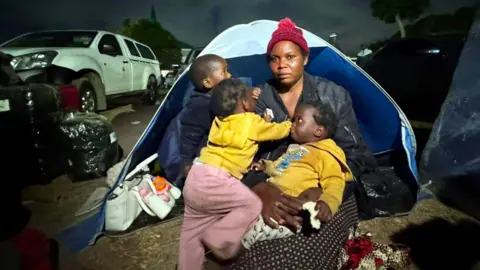
For weeks now, angry and distressed residents in Indonesia's westernmost province have been raising white flags over the state's slow response to a series of deadly floods. Triggered by a rare cyclone in November, the deluge killed more than 1,000 people and displaced hundreds of thousands across the island of Sumatra. In Aceh, the worst-hit province, many still do not have ready access to clean water, food, electricity and medical supplies.
In a sign of just how frustrating managing the crisis has become, the governor of North Aceh broke down publicly earlier this month. Does the central government not know [what we're experiencing]? I don't understand, a tearful Ismail A Jalil said in front of cameras. But President Prabowo Subianto has refused foreign aid, insisting the situation is under control. Indonesia is capable of overcoming this disaster, he told his cabinet last week.
Prabowo's administration has increasingly been criticised as reactive, disorganised and out of touch. His government’s response to November's floods has become yet another challenge for the leader, while his approval ratings hold steady at about 78%.
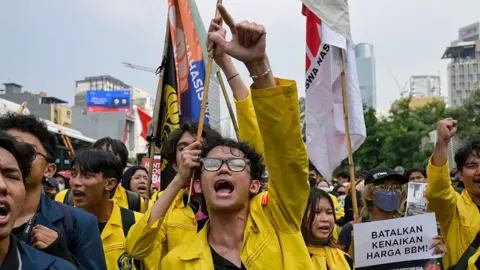
Last Thursday, dozens of protesters rallied in Aceh's capital, Banda Aceh, waving white flags and demanding that the central government opens the door to foreign aid. The flags are a distress signal meant to alert the international community about ongoing hardships.
Provincial authorities have reached out to the United Nations for support, expressing a desire for help amid a collapsing infrastructure that has left entire villages cut off and suffering from sickness and starvation. While some aid offers have been made, like from the UAE with 30 tonnes of rice, the central government has turned them away, further exacerbating the crisis in Aceh.
The refusal to accept international aid highlights a broader political calculus, reflecting the administration's concern over image and authority in handling the disaster. Critics emphasize the need for rapid external assistance, especially as many in Aceh recall the much swifter global response to the 2004 tsunami, which claimed nearly a quarter of a million lives.
In a sign of just how frustrating managing the crisis has become, the governor of North Aceh broke down publicly earlier this month. Does the central government not know [what we're experiencing]? I don't understand, a tearful Ismail A Jalil said in front of cameras. But President Prabowo Subianto has refused foreign aid, insisting the situation is under control. Indonesia is capable of overcoming this disaster, he told his cabinet last week.
Prabowo's administration has increasingly been criticised as reactive, disorganised and out of touch. His government’s response to November's floods has become yet another challenge for the leader, while his approval ratings hold steady at about 78%.
Last Thursday, dozens of protesters rallied in Aceh's capital, Banda Aceh, waving white flags and demanding that the central government opens the door to foreign aid. The flags are a distress signal meant to alert the international community about ongoing hardships.
Provincial authorities have reached out to the United Nations for support, expressing a desire for help amid a collapsing infrastructure that has left entire villages cut off and suffering from sickness and starvation. While some aid offers have been made, like from the UAE with 30 tonnes of rice, the central government has turned them away, further exacerbating the crisis in Aceh.
The refusal to accept international aid highlights a broader political calculus, reflecting the administration's concern over image and authority in handling the disaster. Critics emphasize the need for rapid external assistance, especially as many in Aceh recall the much swifter global response to the 2004 tsunami, which claimed nearly a quarter of a million lives.