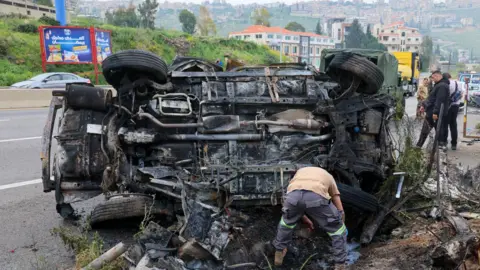
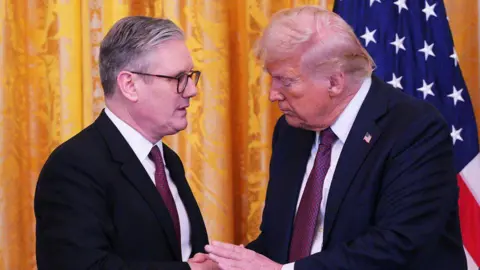
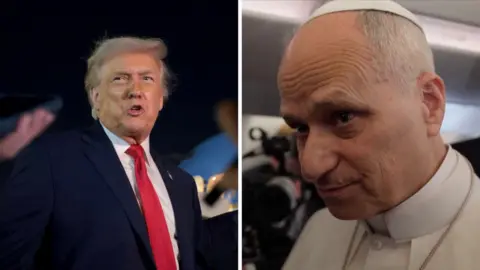
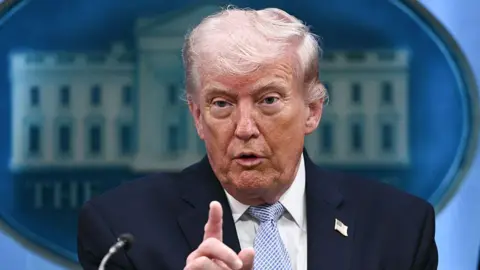
The US ambassador to the UN has accused Rwanda of leading Africa's Great Lakes region toward war, just over a week after a peace deal was signed in Washington to end the decades-long conflict. US President Donald Trump hailed the deal between DR Congo's President Félix Tshisekedi and Rwanda's President Paul Kagame as 'historic' and 'a great day for Africa, a great day for the world'. But the M23 rebel group claims it has 'fully liberated' Uvira in an operation allegedly backed by Rwanda. Although Rwanda denies these allegations, international experts have accused it of having 'de facto control' over the M23. The M23 rebels did not sign the peace deal and are participating in a separate process led by Qatar, a US ally. This latest escalation increases the complexity of an already intricate conflict. Prof Jason Stearns, a political scientist specializing in the region, suggests that the M23's actions aim to leverage its position in negotiations, while Burundian government fears the rise of rebel groups if the M23 establishes control in South Kivu. The fighting could potentially destabilize the region and undermine Trump's recent diplomatic efforts.
Peace Deal Chaos: M23 Rebels Seize Key City in DR Congo
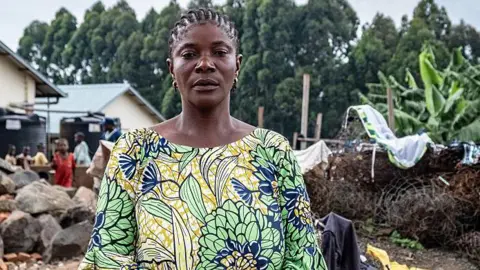
Peace Deal Chaos: M23 Rebels Seize Key City in DR Congo
Just days after a major peace agreement, fighting erupts in the Democratic Republic of Congo as M23 rebels capture Uvira, raising tensions in the Great Lakes region.
A peace agreement between the DR Congo and Rwanda, hailed by US President Donald Trump as historic, has disintegrated following the M23 rebel group's recent capture of Uvira, a critical city in South Kivu province. The conflict has reignited amid accusations of Rwandan support for the rebels, jeopardizing regional stability and the ongoing peace negotiations.