In brief
Vance claims Europe's biggest threats are internal, targeting free speech and migration policies within mainland nations.
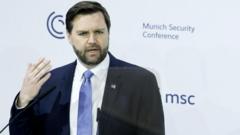
US Vice-President JD Vance has stirred controversy at the Munich Security Conference, asserting that the greatest challenges Europe faces are not external threats from Russia or China but internal issues. Contrary to expectations that he would discuss the Ukraine war, Vance spent most of his speech alleging that European leaders, including those from the UK, were abandoning core values surrounding free speech and migration.The audience reacted with notable silence, and several politicians condemned his remarks. German Defense Minister Boris Pistorius labeled Vance's comments "unacceptable." Vance echoed sentiments from the Trump era, urging Europe to bolster its defense capabilities significantly.While he did touch on the conflict in Ukraine and expressed his hope for peace negotiations, the core of Vance's speech was more focused on cultural issues typical of Trump’s campaigns. He criticized EU leaders for suppressing free speech and linked them to mass migration, stating that they had retreated from their fundamental principles.Kaja Kallas, the EU's foreign policy chief, accused Vance of starting unnecessary tensions with critical allies, while former US ambassador Michael McFaul dismissed Vance's statements as "insulting." Vance also specifically mentioned the case of a British army veteran penalized for silent prayer outside an abortion clinic, arguing that the rights of religious citizens were at risk. He addressed the political landscape in Germany, notably the resistance towards the far-right Alternative for Germany (AfD) party, emphasizing that there should be no "firewall" against public opinions in a democracy.This was met with a strong pushback by Pistorius, who argued that Vance's characterization of European democracy was fundamentally flawed. Vance raised concerns about recent voting issues in Romania tied to external interference, reaffirming his perspective on the fragility of democratic systems. During a chance meeting with Ukrainian President Volodymyr Zelensky, both leaders agreed on the need for further discussions aimed at ending the ongoing conflict. As geopolitical tensions rise, Vance's remarks may have far-reaching implications for US-European relations.