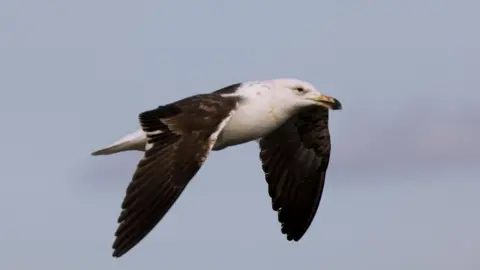
On a sunny day in the Atlantic Ocean, bird watchers from Cape Town venture out to spot endangered seabirds, including the iconic albatross. These birds are unfortunately facing critical challenges due to commercial fishing methods.
The fishing trawlers attract seabirds as they discard fish parts, but this behavior leads to numerous birds being caught in long fishing lines and nets, resulting in accidental drownings.
Tim Appleton, a conservationist, explains the alarming scale of the problem: long lines can be over 100 kilometers with thousands of hooks, endangering countless albatrosses as they seek food.
Andrea Angel, from BirdLife South Africa, emphasizes the vulnerability of albatrosses, stating that 15 out of 22 species are threatened by fishing activities. These seabirds mate for life and face dire consequences if one parent is lost while foraging.
To combat this issue, BirdLife South Africa has introduced bird scaring lines, colorful streamers that deter birds from approaching fishing hooks. These lines are being produced in collaboration with disabled workers from local communities, adding a social impact aspect to the conservation effort.
Despite obstacles, including time constraints on fishermen, the Albatross Task Force has achieved significant success, reducing seabird fatalities by 90% since its inception in 2004. The aim is to expand this model globally so that albatrosses can thrive and reproduce for generations to come.