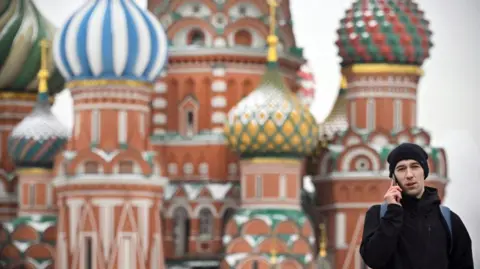
Russia has ordered a block on WhatsApp as the Kremlin intensifies its restrictions on messaging platforms. The Meta-owned app, which has over 100 million users in the country, is seen as a target in the government’s push to steer users towards a state-owned surveillance app.
Kremlin spokesperson Dmitry Peskov indicated the decision arose from Meta's failure to adhere to Russian laws. He suggested that Meta could resume operations if they comply with regulations. Russia's actions come in the context of a broader crackdown on Western social media apps, previously labeling Meta as extremist.
As part of this strategy, Russian authorities are promoting their domestic app, Max, as a secure alternative to WhatsApp. Critics have raised concerns regarding Max’s potential for government surveillance, with claims that the app lacks crucial privacy protections.
This crackdown extends to other messaging platforms, with Telegram also facing access restrictions from Russian regulators. In an effort to counter the growing influence of Telegram, which has gained popularity among military forces, authorities are urging users to transition to state-conducted services.
The initiative represents a significant shift in Russia’s digital landscape, reflecting the government’s aim to control online communication amid ongoing geopolitical tensions.
Kremlin spokesperson Dmitry Peskov indicated the decision arose from Meta's failure to adhere to Russian laws. He suggested that Meta could resume operations if they comply with regulations. Russia's actions come in the context of a broader crackdown on Western social media apps, previously labeling Meta as extremist.
As part of this strategy, Russian authorities are promoting their domestic app, Max, as a secure alternative to WhatsApp. Critics have raised concerns regarding Max’s potential for government surveillance, with claims that the app lacks crucial privacy protections.
This crackdown extends to other messaging platforms, with Telegram also facing access restrictions from Russian regulators. In an effort to counter the growing influence of Telegram, which has gained popularity among military forces, authorities are urging users to transition to state-conducted services.
The initiative represents a significant shift in Russia’s digital landscape, reflecting the government’s aim to control online communication amid ongoing geopolitical tensions.