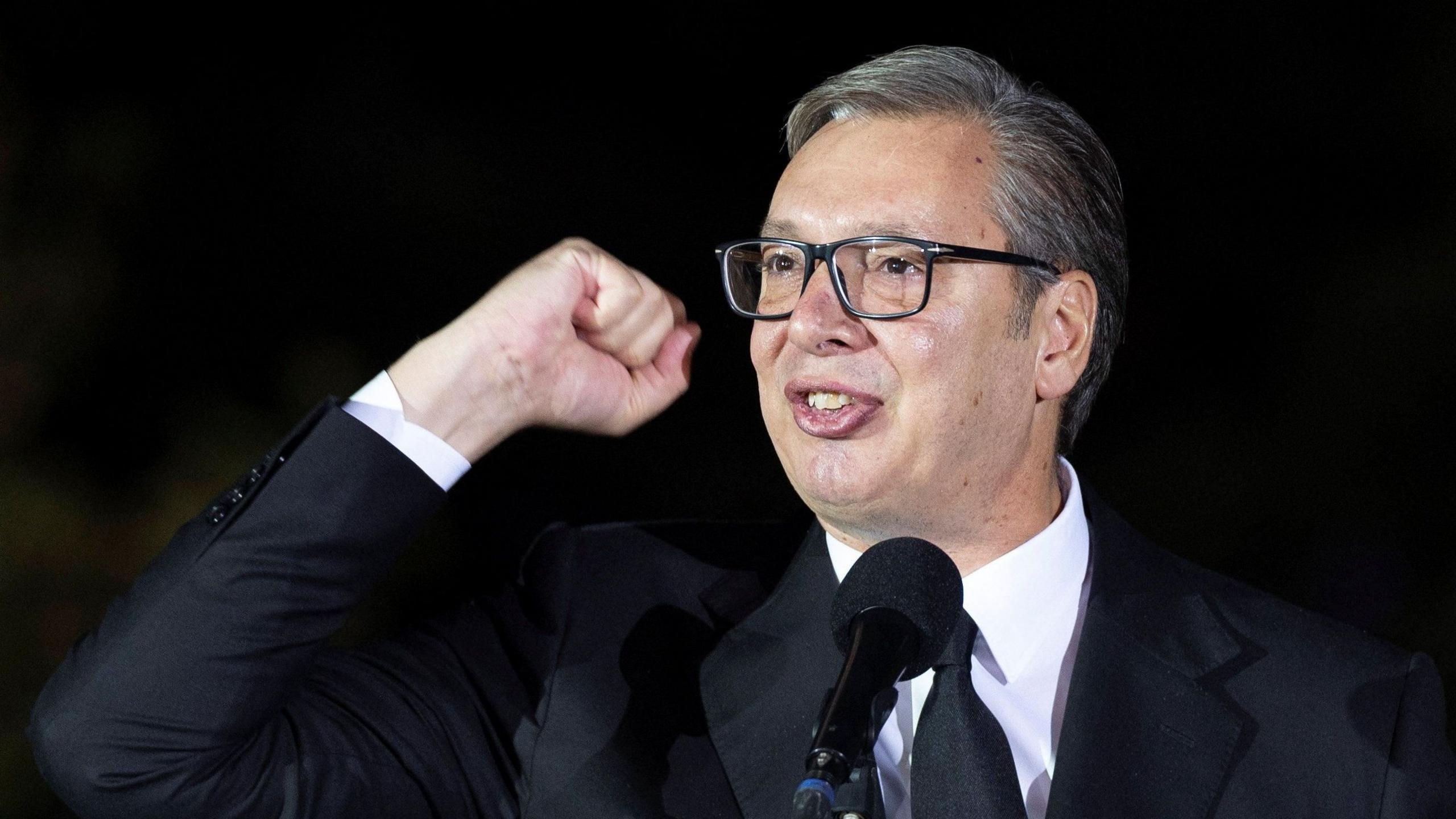
After more than a year of student‑led protests, Serbia’s president, Aleksandar Vučić, stepped down from the office. Vučić told supporters outside the presidential palace that his government had kept the country calm throughout his nine‑year rule.
He already voiced his intent to resign in June and is now positioning himself to become the Progressive Party’s candidate for prime minister in the upcoming snap parliamentary election. A Serbian constitution bars him from serving a third presidential term anyway.
The resignation comes after a chain of high‑profile incidents that sparked anger. In 2024 the roof of Novi Sad’s railway station collapsed, killing 16 people, and critics linked the disaster to rushed, cost‑cutting renovation work overseen by Vučić’s administration. Protesters marched across the city, demanding accountability.
Later that summer, demonstrations grew into turmoil when police fired tear gas, sparking accusations of brutality. The opposition, under the banner of a student‑led anti‑corruption movement called Students Win, and pro‑Western forces in the European Serbia coalition, now line up against the ruling Progressive Party in Parliament.
With Vučić’s resignation, Serbia will hold a presidential election no later than three months after he steps down. That means two nationwide voting takes place in 2026: a parliamentary vote in October and a president’s poll in December, giving voters a chance to shape the country’s future hastily.
In the meantime, the former president used a pardon power to heal his own supporters, granting amnesty to 23 students and 23 loyal party members for alleged offenses during the unrest.
Vukic has promised Serbia a EU‑friendly path while also courting close ties with Russia and welcoming Chinese investment. The challenge now is whether the new leadership can curb corruption and keep the growing protests in check.