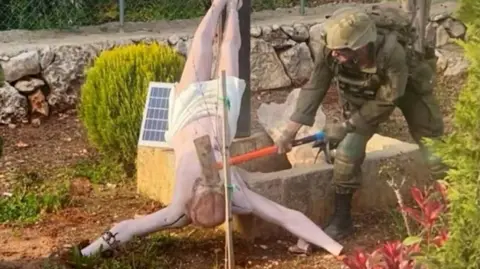
An image of an Israeli soldier apparently hitting a statue of Jesus with a sledgehammer in southern Lebanon has prompted widespread condemnation after being widely shared online.
Israel's Prime Minister Benjamin Netanyahu said he was stunned and saddened by what happened. Foreign Minister, Gideon Saar, said: We apologise for this incident and to every Christian whose feelings were hurt..
Locals say the statue was on a crucifix outside a family home on the edge of Debel, one of the few villages where residents have remained during Israel's war with Hezbollah.
The head of Debel's congregation, Father Fadi Flaifel, told the BBC: We totally reject the desecration of the cross, our sacred symbol, and all religious symbols. It goes against the declaration of human rights, and it doesn't reflect civility. He claimed similar acts had happened before.
The Israeli military confirmed that the image circulating on social media was genuine, and said it viewed the incident with great severity and emphasises that the soldier's conduct is wholly inconsistent with the values expected of its troops.
Appropriate measures will be taken against those involved, the Israel Defense Forces (IDF) added, saying it was working with the Christian community to restore the statue to its place.
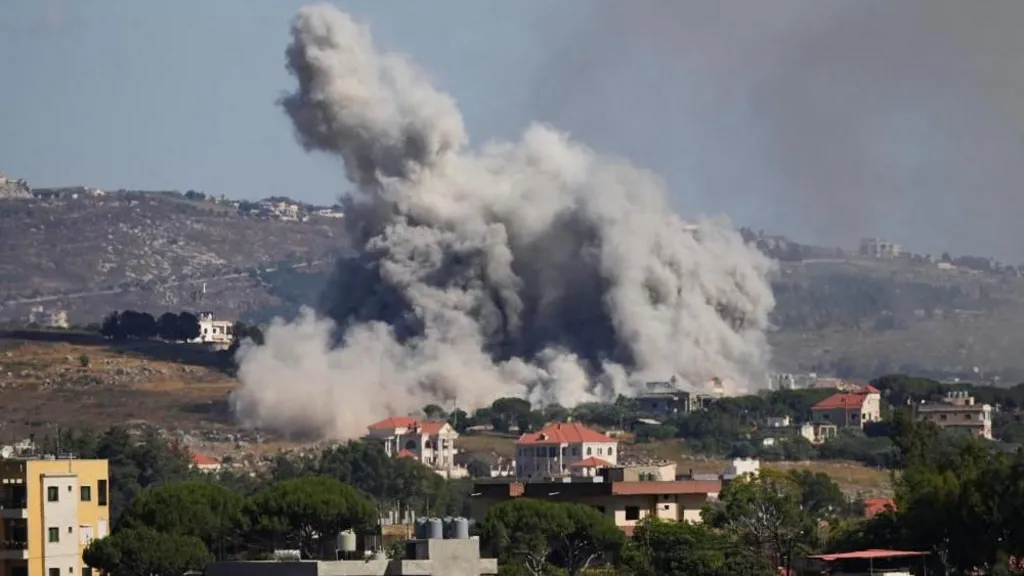
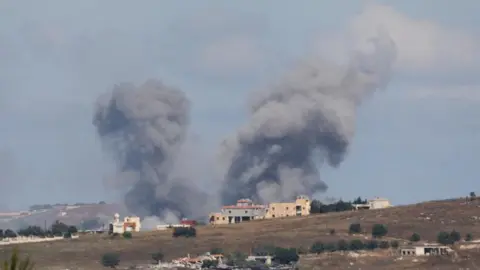
Thousands of Israeli troops continue to occupy a wide area of southern Lebanon after a US-brokered ceasefire came into force between Israel and Lebanon on Friday. The ceasefire has paused six weeks of fighting between the IDF and the Shia Muslim armed group Hezbollah, although both sides have accused each other of violations.
The attack on the statue prompted the US Ambassador to Israel, Mike Huckabee, to tweet that swift, severe, & public consequences are needed.
Right-wing US commentators also denounced the act, with former congressman Matt Gaetz labeling it horrific. Polling suggests a recent decline in support for Israel among Americans has occurred, with 60% of US adults holding an unfavorable view of the country.
The incident signals a growing tension around religious symbols in the region, with analysts noting an increased polarization and ultra-nationalist sentiments impacting inter-faith relations.