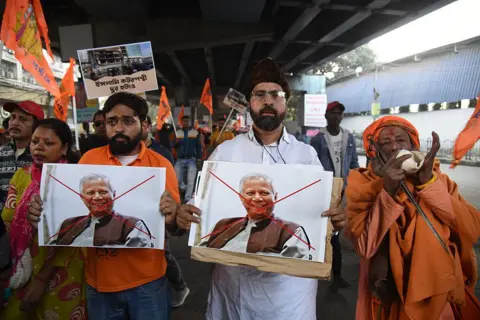
The killing of a Hindu man during recent violent protests in Bangladesh has pushed already strained ties between Dhaka and Delhi into a deeper crisis. As the two neighbours accuse each other of destabilising relations, questions are growing over whether their once close, time-tested relationship is fraying beyond repair. In India, the episode has sparked protests by Hindu nationalist groups. The man who was killed - Dipu Chandra Das, 27 - a member of Bangladesh's Hindu minority, was accused of blasphemy and beaten to death by a mob last week in Mymensingh, in northern Bangladesh. The incident happened as violent protests broke out over the murder of Sharif Osman Hadi, a prominent student leader, in the capital, Dhaka. Hadi's supporters alleged that the main suspect, who they say is linked to the Awami League - the party of deposed prime minister Sheikh Hasina - had fled to India, further fuelling anti-India sentiment in Muslim-majority Bangladesh. Bangladeshi police, however, said there was no confirmation that the suspect had left the country.
In recent days, the South Asian neighbours have suspended visa services in several cities, including Delhi, and accused each other of failing to ensure adequate security for their diplomatic missions. The two countries have also summoned each other's high commissioners to raise their security concerns. Riva Ganguly Das, a former Indian high commissioner to Dhaka, expressed hope that tensions would not escalate further, adding that the volatile situation in Bangladesh complicates predictions for the future.
Anti-India sentiment in Bangladesh is not new, particularly in light of India's perceived influence during Hasina's extended rule. Following Hadi's killing, provocative anti-India statements from young leaders have emerged, with incidents in which Bangladeshi security forces had to intervene to prevent protests targeting the Indian high commission.
In India, nationalist sentiments are running high after Das's brutal lynching sparked outrage. The interim Bangladeshi government, led by Nobel laureate Muhammad Yunus, condemned the violence and pledged accountability for those involved. However, the rise of radical elements and mob violence remains a significant concern as the country approaches elections.
Experts advise that the current tensions must be managed carefully as both nations navigate this complex situation. With the deteriorating relationship marked by mutual accusations and protests, many are urging both countries to rebuild trust to maintain stability in the region.
In recent days, the South Asian neighbours have suspended visa services in several cities, including Delhi, and accused each other of failing to ensure adequate security for their diplomatic missions. The two countries have also summoned each other's high commissioners to raise their security concerns. Riva Ganguly Das, a former Indian high commissioner to Dhaka, expressed hope that tensions would not escalate further, adding that the volatile situation in Bangladesh complicates predictions for the future.
Anti-India sentiment in Bangladesh is not new, particularly in light of India's perceived influence during Hasina's extended rule. Following Hadi's killing, provocative anti-India statements from young leaders have emerged, with incidents in which Bangladeshi security forces had to intervene to prevent protests targeting the Indian high commission.
In India, nationalist sentiments are running high after Das's brutal lynching sparked outrage. The interim Bangladeshi government, led by Nobel laureate Muhammad Yunus, condemned the violence and pledged accountability for those involved. However, the rise of radical elements and mob violence remains a significant concern as the country approaches elections.
Experts advise that the current tensions must be managed carefully as both nations navigate this complex situation. With the deteriorating relationship marked by mutual accusations and protests, many are urging both countries to rebuild trust to maintain stability in the region.