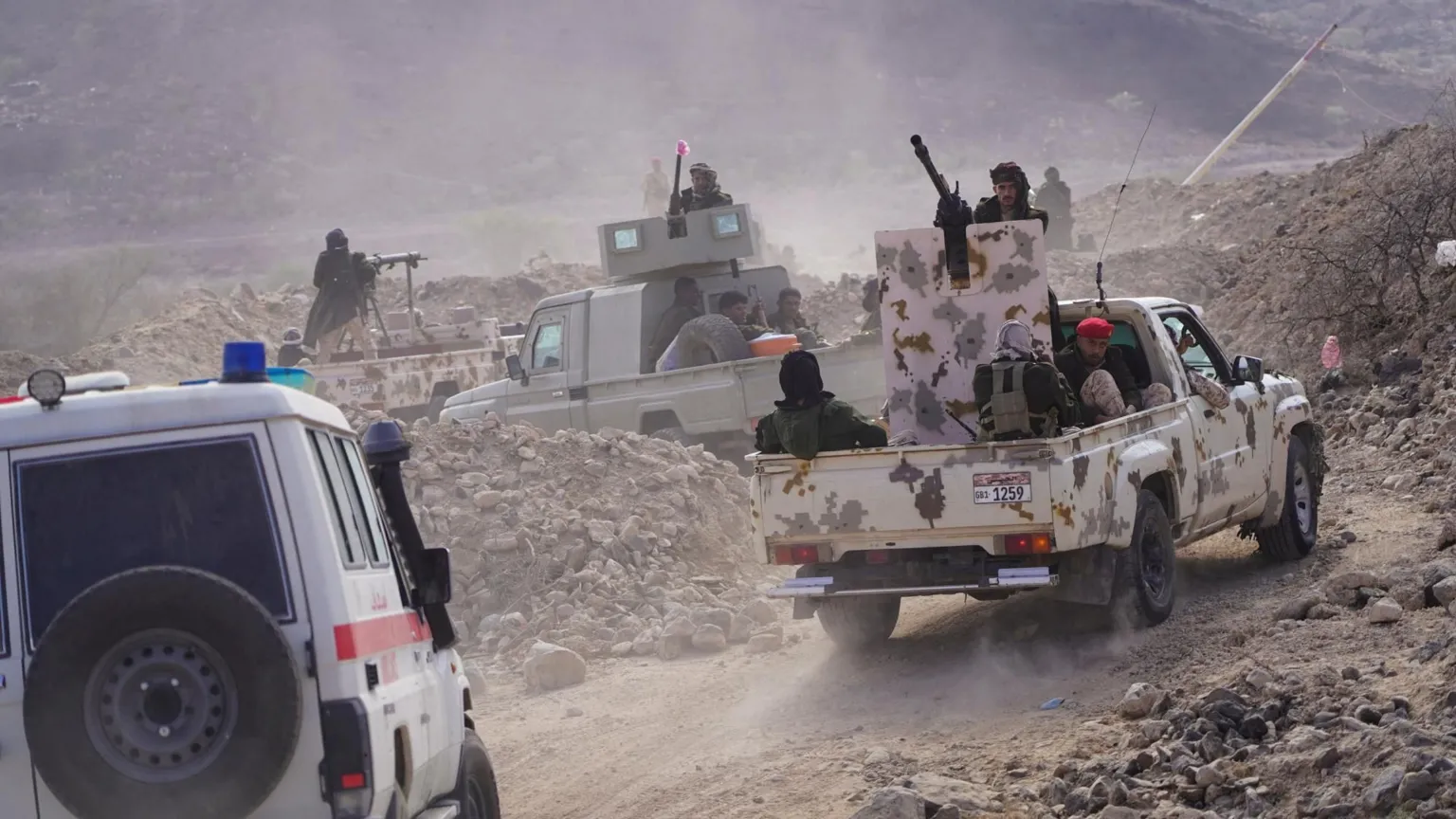
Yemen's future hangs in the balance after a dramatic turn of events in the south which have brought Saudi Arabia and the United Arab Emirates into unprecedented direct confrontation and threaten the country with partition.
Both Gulf powers have intervened on behalf of Yemen's internationally recognized government in the country's long-running civil war, but a fracturing of the alliance has seen them backing different rival groups on the ground, one of whom is now pushing to declare the independence of a breakaway state in southern Yemen.
On Friday, the UAE-backed force declared that a war had begun, accusing Saudi-backed ground forces of launching an attack alongside air strikes by the Saudi air force.
Yemen's civil war broke out in 2014 and has plunged the already impoverished country into years of deadly violence and one of the world's worst hunger crises.
At the start of the war, the Iran-backed rebel Houthi movement took control of most of northern Yemen, including the capital Sanaa, from the government. The conflict escalated in 2015, when a coalition of Arab states including Saudi Arabia and the UAE launched a military campaign to restore the government's rule.
A ceasefire has de-escalated the conflict with the Houthis in recent years and led to a freezing of the front lines.
But the Saudi-backed ruling coalition – the Presidential Leadership Council (PLC), formed in 2022 and designed to unite various anti-Houthi factions - has frayed. The vast majority of southern Yemen has been taken by UAE-backed separatists, the Southern Transitional Council (STC), which is formally part of the coalition.
The infighting escalated on 2 December, when the STC - which seeks an independent state in the south - launched a large-scale military offensive in the east of the country and rapidly took control of territory from government forces. The STC's advances included the oil-rich Hadramawt province that borders Saudi Arabia.
The STC said the offensive was necessary to restore stability in the south. But it was denounced as a rebellion by the head of the PLC, Rashad al-Alimi, who said the STC's separatist push threatened to fracture Yemen and plunge the region into chaos.
Tensions have further escalated with air strikes by the Saudi-led coalition. On Friday, seven people were killed in an air strike on an STC military camp in Hadramawt, an STC official said. That followed air strikes on Tuesday on the southern port of Mukalla, where the coalition accused the UAE of delivering two ships loaded with military equipment to the separatists over the weekend.
The UAE foreign ministry denied the allegations, saying the shipment did not contain weapons and that the vehicles were to be used by Emirati forces in the country.
Following Tuesday's strikes, the head of Yemen's Presidential Council said it had cancelled a joint defense treaty with the UAE and ordered all its forces to leave the country within 24 hours. The Saudi foreign ministry backed the call for the Emirati forces to leave, accusing the UAE of pressuring the STC to launch the offensive in the east, which has reached Saudi Arabia's borders.
The UAE's motivations in supporting the STC are seen as helping it secure access to key sea ports and challenging an Islamist party that sits in the government. But even if the UAE fully removes its physical presence in Yemen, it won't change anything according to experts, as they have relied heavily on proxies and special forces in the region.