In brief
UK Prime Minister Sir Keir Starmer has embarked on a historic three-day visit to China, aiming to foster trade and cultural relations. As he prepares to meet President Xi Jinping, Starmer faces criticism over China’s human rights record and security threats posed to the UK. He insists that the trip will be beneficial, maintaining that it’s crucial to engage with the world's second-largest economy while navigating complex political criticisms at home.
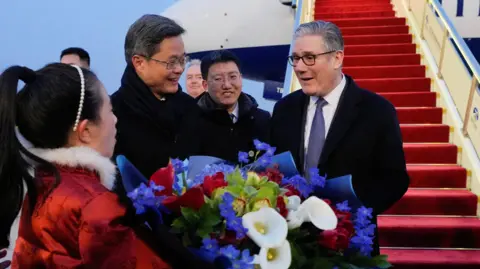
Prime Minister Sir Keir Starmer has arrived in China for a three-day visit - the first by a British prime minister in eight years. Sir Keir is seeking to strengthen trading and cultural ties between the two nations after years of acrimony. But he has faced criticism from opponents at home over the risk posed by China to the UK's national security and Xi Jinping's human rights record.The PM, who will meet President Xi on Thursday, said the trip will bring benefits to the UK and it was important to maintain a strategic and consistent relationship with the world's second-largest economy. As he arrived at the airport in Beijing, Sir Keir was greeted by a delegation of Chinese government officials and presented with a bouquet of flowers. Union flags were seen flying in Beijing's Tiananmen Square.Addressing the 60 British business leaders accompanying him on the trip, the PM said: On this delegation, you're making history. You're part of the change that we're bringing about. We are resolute about being outward-looking, about taking opportunities, about building relationships... and always being absolutely focused on our national interest.For a UK prime minister, the politics of engaging with China is tricky, given accusations against the nation for committing crimes against humanity in regions like Xinjiang, as well as concerning its human rights record with figures like Jimmy Lai, a pro-democracy media tycoon.Starmer's critics, including members of the Conservative Party, have raised alarm over the government's decision to approve plans for a Chinese mega-embassy in London, fearing it may act as a spying hub. Amidst these challenges, the PM asserts that engagement is vital to discussing disagreements while advancing shared goals.