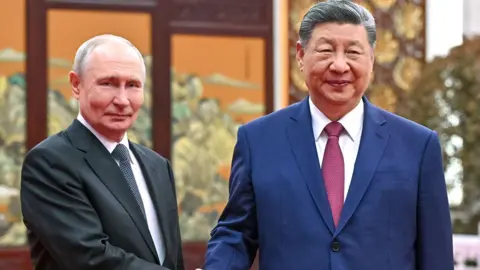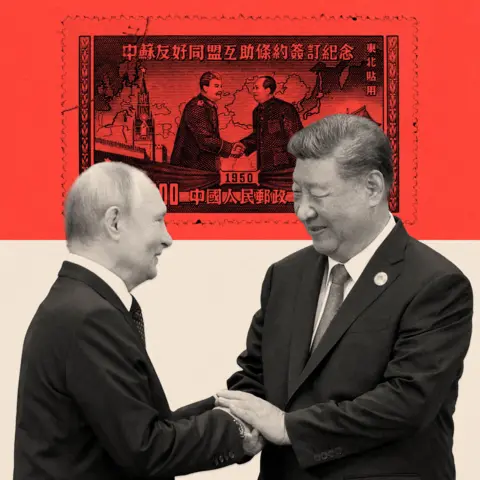
Last September, during a stroll through Beijing's Tiananmen Square, Presidents Xi Jinping and Vladimir Putin engaged in a curious exchange about the possibilities of human immortality through organ transplants. Their seemingly lighthearted discussion belies the serious and often strategic relationship that has developed over their years in power. Describing each other as 'best friends,' Xi and Putin represent a partnership characterized by its survival against the backdrop of western opposition, particularly after Western sanctions have increasingly pushed Russia towards China.
Their cooperation is now focused heavily on various sectors, particularly the energy market, where Russia's abundant oil and gas reserves align perfectly with China's growing energy consumption needs. A significant development is the anticipated Power of Siberia 2 pipeline, which will significantly boost gas exports from Russia to China, showcasing the strategic nature of their ties.
This largely asymmetrical relationship comes with some risks for both sides. While Russia benefits from China's economic might, it is aware of its subordinate position in this partnership, leading to concerns about dependence. However, amidst the complexities, both nations recognize the importance of their partnership, driven by shared interests such as a mutual opposition to the perceived dominance of the US and a desire for a more multipolar world order.
Culturally, people-to-people exchanges are on the rise, with increasing connections through travel and academic exchanges. Russians turning to Chinese technology and brands as Western options dwindle further emphasize the intertwined trajectories of the two nations. Despite the imbalances, analysts suggest that the relationship between China and Russia will endure in the foreseeable future, as their connections are now too vital to fail.
Their cooperation is now focused heavily on various sectors, particularly the energy market, where Russia's abundant oil and gas reserves align perfectly with China's growing energy consumption needs. A significant development is the anticipated Power of Siberia 2 pipeline, which will significantly boost gas exports from Russia to China, showcasing the strategic nature of their ties.
This largely asymmetrical relationship comes with some risks for both sides. While Russia benefits from China's economic might, it is aware of its subordinate position in this partnership, leading to concerns about dependence. However, amidst the complexities, both nations recognize the importance of their partnership, driven by shared interests such as a mutual opposition to the perceived dominance of the US and a desire for a more multipolar world order.
Culturally, people-to-people exchanges are on the rise, with increasing connections through travel and academic exchanges. Russians turning to Chinese technology and brands as Western options dwindle further emphasize the intertwined trajectories of the two nations. Despite the imbalances, analysts suggest that the relationship between China and Russia will endure in the foreseeable future, as their connections are now too vital to fail.