In brief
Bombay, now Mumbai, has evolved from a collection of islands to a metropolitan powerhouse, reflecting a tapestry of cultures and identities. A new exhibition showcases the city's transformation through history, highlighting its architectural evolution and the lives of its citizens.
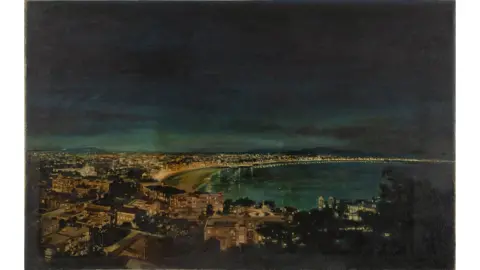
From seven islands to a city of 20 million, Bombay (now Mumbai) has been shaped over centuries by political, economic, and social forces. From Koli fisherfolk to colonial planners, and from Bollywood stars to textile barons, many have influenced this vibrant city's landscape and identity.The city is ever-evolving, the past giving way to the future, birthing new guises and blurring the old. From fishing nets to ports and mills to malls, Bombay has constantly reinvented itself and remained a city in flux.A new exhibition titled 'Bombay Framed' charts the city's shape-shifting passage through the centuries, featuring a stunning array of paintings, photographs, and multimedia prints. Over 100 images spanning three centuries show Bombay in its full diversity, from the elite worlds of Zoroastrian merchants and cinema stars to the working-class lives of ordinary citizens.Curator Gyan Prakash highlights that the exhibition invites viewers to consider the city itself as an artwork; layered, complex, and made up of many different experiences.Key moments, such as the joining of separate islets into a single island city in the 1830s and 40s, the demolition of fort walls in the 1860s, and the construction of the Marine Drive corniche in the 1920s and 30s, illustrate Bombay's dramatic transformations. Recent infrastructural developments have been characterized by a push for modernity through new sea bridges and coastal roads since the 2000s.Bombay remains a city of stark contradictions, where luxury towers stand alongside shanty towns, and ancient caves coexist with cutting-edge research facilities. The exhibition seeks to portray the soul of the city as animated by the people who inhabit it.The title 'Bombay Framed' reflects the historical context of many displayed images before the city's official name change to Mumbai in the mid-1990s. Curator Prakash describes the dual naming as an intrinsic part of the city's complex identity.