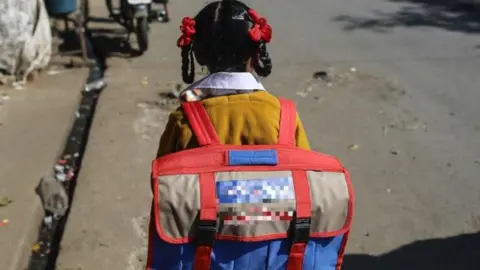
India's juvenile justice system, designed to reintegrate minors into society, is failing many children accused of crimes. One such case is that of Pooja, who was arrested at 16 for allegedly murdering her mother and spent six years in prison without appearing before a Juvenile Justice Board (JJB) as required by law.
Pooja's story highlights the systemic issues within the juvenile justice framework, where laws intended to protect minors often fall short in practice. The JJB is meant to assess minors' cases promptly to ensure they are treated fairly; however, due to negligence, many children like Pooja are improperly placed in adult facilities, suffering from neglect and lack of oversight.
Experts emphasize that India's juvenile justice law has not been effectively implemented since its introduction nearly four decades ago. While the law mandates that minors must receive child-friendly care, inadequate facilities, lack of proper oversight, and failing JJBs have resulted in countless children falling through the cracks. Activists argue that many JJBs are understaffed and poorly equipped, leading to delayed hearings and inadequate follow-up on children's well-being.
According to the India Justice Report (IJR), many JJBs do not have full benches, resulting in a backlog of cases. Furthermore, many institutions that house juveniles don't provide adequate rehabilitation services, leaving young offenders with little more than a room to sleep in. This environment can lead to the replication of external gang cultures inside these facilities.
Programs like Echo in Bengaluru demonstrate how rehabilitative initiatives can help juveniles. Success stories from Echo show that with proper counseling and vocational training, children can turn their lives around. Addressing the root causes of their actions, these initiatives provide realistic pathways for reintegration into society.
As advocates for juvenile justice continue to push for reforms, the question remains: how many more children need to suffer before systemic changes are actualized? Fr. Antony Sebastian of Echo insists, Every child deserves a second chance. Ensuring this right may be the only hope for many like Pooja who were let down by a failing system.