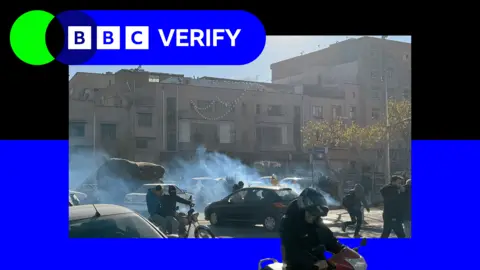
Protests have broken out in at least 17 of Iran's 31 provinces, presenting the largest challenge to the country's clerical establishment since 2022, a BBC Verify and BBC Persian analysis has found. The BBC's analysis of protests includes only those for which we have verified video footage - the true number is almost certainly far higher. There are reports of protests in a further 11 provinces. The wave of protests has spread rapidly across Iran since December 28, when anger initially broke out in the capital Tehran following a fresh and sharp devaluation of the country's currency against the dollar. Verified footage from the last 10 days shows evidence of anti-government demonstrations in more than 50 towns and cities across the country. More than 100 videos geolocated and checked for publication date paint a picture of the scale of the unrest. This situation represents the largest challenge to the state since the Women, Life and Freedom protests in 2022. According to experts, the demonstrations are fueled by widespread dissatisfaction with the government's handling of the economy, and have recently turned more explicitly anti-state, with calls for the ousting of Supreme Leader Ayatollah Ali Khamenei. Amid this turmoil, the actions of security forces have become increasingly violent, with reports of fatalities and crackdown tactics reminiscent of prior protests. While there has been some initial restraint from police, further escalations and injuries have been reported, leading to a grim atmosphere and uncertainty about the future of protests in Iran. Despite the widespread unrest, experts caution that the protests do not yet pose an existential threat to the regime.
Waves of Change: Iran's Protests Surge Across Provinces
Waves of Change: Iran's Protests Surge Across Provinces
Massive anti-government protests are underway across Iran, challenging the clerical regime like never before. With unrest reported in 17 provinces, here's what's happening and why it matters.
Protests have erupted in at least 17 out of Iran's 31 provinces, marking a significant challenge to the government amidst economic turmoil. The demonstrations, which began on December 28, were sparked by anger over currency devaluation and have since spread to over 50 cities. Despite initial police restraint, the response has intensified with reports of violence. Experts suggest these protests indicate a deepening discontent toward government mismanagement and corruption.