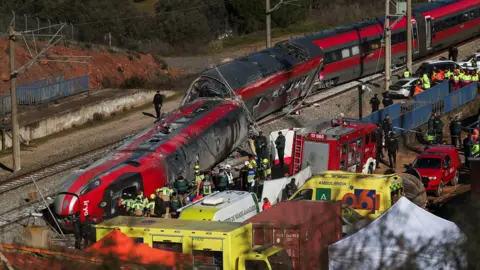
At least 39 people have died and dozens more have been injured after two high-speed trains collided in southern Spain, according to the country’s Civil Guard. The incident occurred near the city of Córdoba and is described by local officials as Spain's worst rail crash in over a decade. Prime Minister Pedro Sánchez is set to visit the scene later today, where rescue efforts are ongoing.
The collision took place at approximately 19:45 local time on Sunday, shortly after a train had departed Málaga for Madrid. It is reported that the train derailed and crossed into the opposing track, colliding with oncoming traffic from Madrid to Huelva. Most victims were in the front carriages of the Huelva-bound train.
Though the exact cause of the derailment is still unknown, officials have noted that an investigation is underway, though conclusions may take at least a month. Transport Minister Óscar Puente called the circumstances surrounding the crash “extremely strange” and stated that all consulted railway experts were baffled by the incident's causes, with possibilities including mechanical failure or infrastructure issues rather than human error or excessive speeds.
With around 400 passengers aboard both trains, rescue teams have been working to ascertain if there are still those trapped within the derailed carriages. Emergent actions are complicated due to the twisted metal and structure of the trains. Rescue operations are expected to continue with the awaited arrival of heavy machinery, while local authorities have set up a support center for the families of the victims.
The collision took place at approximately 19:45 local time on Sunday, shortly after a train had departed Málaga for Madrid. It is reported that the train derailed and crossed into the opposing track, colliding with oncoming traffic from Madrid to Huelva. Most victims were in the front carriages of the Huelva-bound train.
Though the exact cause of the derailment is still unknown, officials have noted that an investigation is underway, though conclusions may take at least a month. Transport Minister Óscar Puente called the circumstances surrounding the crash “extremely strange” and stated that all consulted railway experts were baffled by the incident's causes, with possibilities including mechanical failure or infrastructure issues rather than human error or excessive speeds.
With around 400 passengers aboard both trains, rescue teams have been working to ascertain if there are still those trapped within the derailed carriages. Emergent actions are complicated due to the twisted metal and structure of the trains. Rescue operations are expected to continue with the awaited arrival of heavy machinery, while local authorities have set up a support center for the families of the victims.