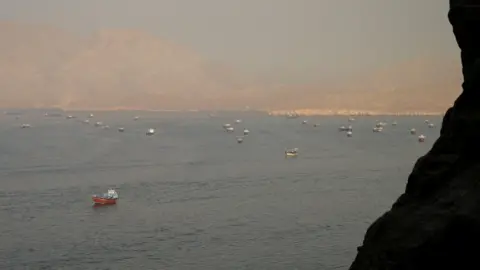
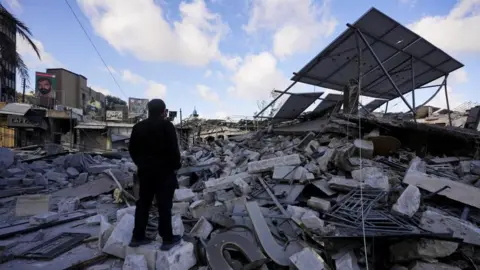
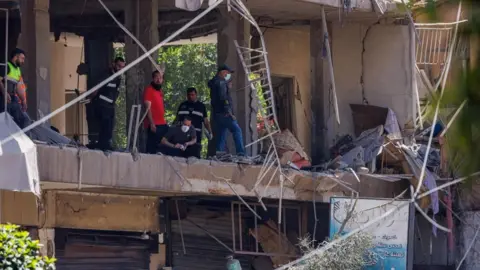
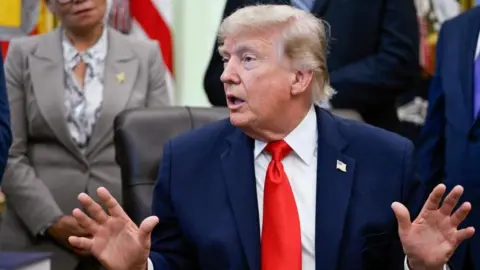
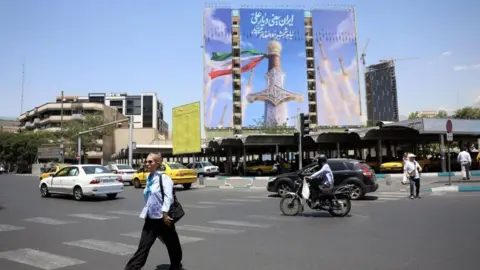
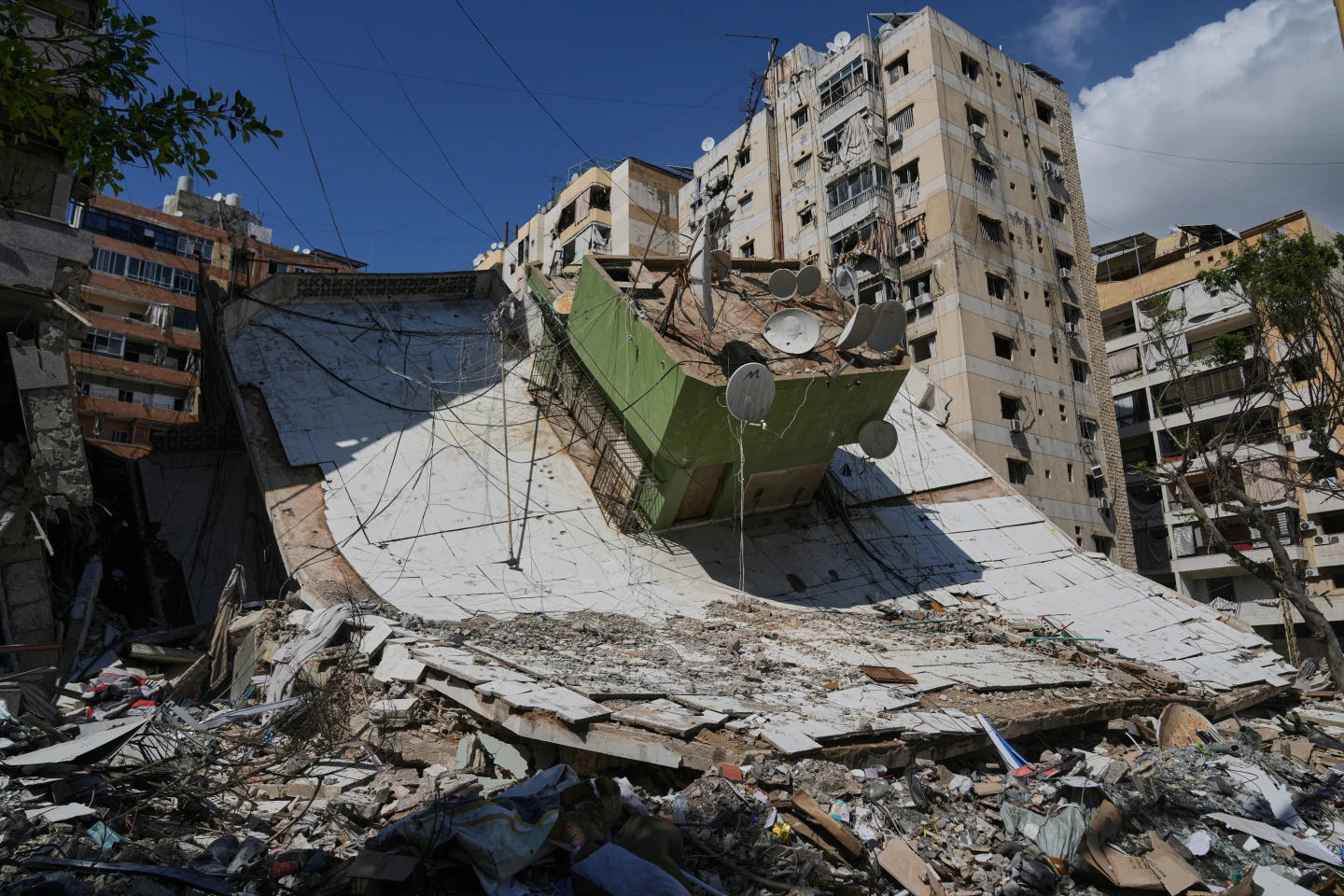
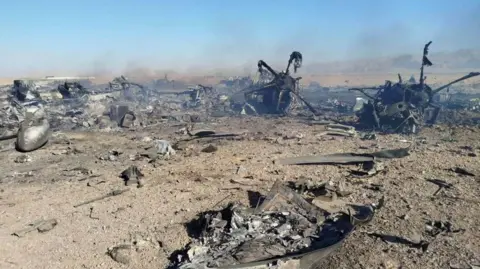
US special forces launched a high-stakes raid into Iran on Sunday to rescue an injured airman left stranded in a remote mountainous region after his aircraft was shot down two days earlier. Details have emerged about how the US raced against the clock and advancing Iranian operatives to find the officer deep inside hostile territory. The airman's ordeal began on Friday when an F-15E Strike Eagle jet was shot down over south-western Iran - the first incident of its kind in more than 20 years. The two US military personnel on board ejected and, while the pilot was rescued the same day, the second crew member - a weapons operator - became separated and remained stranded in a sparsely populated, rugged region. Official confirmation soon followed swirling reports that a US airman was missing inside a war zone. While US aircraft were seen flying low over the area on Saturday, Iran offered a bounty of £50,000 ($66,100) to anyone who found him alive, and videos shared on social media, which have not been verified by the BBC, appeared to show armed civilians searching. The airman was armed with a handgun, US officials said, and would have received training for this situation, which involves intermittently turning on a beacon signal to help locate him, getting to high ground, establishing communications and concealing himself. The crew member hid in a mountain crevice and restricted the use of his beacon signal out of concern it could be picked up by Iran, Trump administration officials confirmed at a news conference on Monday. A senior Trump administration official said the CIA was able to trace the airman's exact location and informed the Pentagon, which would have also had to rule out the possibility the beacon signal was an Iranian trap. US President Donald Trump later said the airman's location was monitored '24 hours a day' as he was 'being hunted down by our enemies, who were getting closer and closer by the hour'. At Monday's news conference, the president said the US soldier was severely injured, treated his own wounds, and - while bleeding profusely - scaled cliffs to transmit his location. The CIA also reportedly ran a deception campaign inside Iran, falsely spreading word that US forces had already found him. As US special forces aboard several aircraft made their way towards the stranded officer, strikes were reportedly launched to keep Iranian troops away from the area. The New York Times reported that the airman communicated information on Iranian positions from his hiding place high on a 7,000ft ridge to aid with those strikes. CBS News reported that Navy Seals - highly trained special operations troops - were then airdropped to recover the airman. The rescue mission involved 155 aircraft, including four bombers, 64 fighters, and 48 refueling tankers. However, their departure was not straightforward. Two planes tasked with retrieving rescue crews became bogged down in soil and were unable to take off from the remote base in Iran they had used to land. US officials said the planes were destroyed to keep them out of enemy hands, standard practice for the military. Footage and photos assessed by BBC Verify appeared to show a smouldering aircraft wreckage in a mountainous area of central Iran. Iranian officials claimed two US C-130 military transport planes and two Black Hawk helicopters were destroyed during the operation, but US officials have denied they came under attack. US special forces eventually left Iran on three extra aircraft sent to collect the crews, with one official noting a rudimentary airfield was utilized for the operation. The rescued airman landed in Kuwait for medical treatment. Trump said he was 'seriously wounded' but 'will be just fine'. This operation showcases the incredible dedication and training of US military personnel who risked their lives to ensure no one is left behind.
US Airman Rescued in Daring Iranian Operation
US Airman Rescued in Daring Iranian Operation
In a dramatic rescue operation, US special forces launched a high-risk raid into Iran to save an injured airman stranded after his aircraft was shot down.
An injured US airman was successfully rescued from hostile territory in Iran after a week-long operation that featured multiple challenges, including a downed jet and a rapid response by US forces. The airman initially separated from his crew during the incident and faced enormous peril as he concealed himself in remote mountains. Despite the chaos, the CIA successfully tracked his location, allowing for a swift rescue operation that mobilized a massive air force strike to ensure safety during the extraction.