In brief
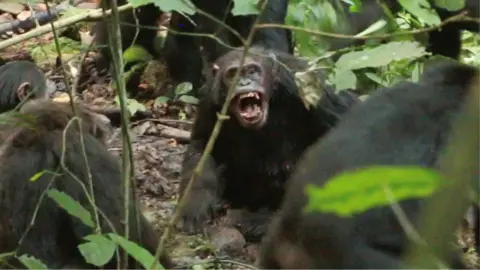
The Ngogo chimpanzees in Uganda's Kibale National Park have descended into a brutal 'civil war,' leading to the deaths of numerous individuals, including infants. Researchers indicate that changes in social structure and territorial disputes may have triggered this violent conflict. This study sheds new light on the dynamics of group behavior and conflict in chimpanzees, potentially offering insights into human societal issues.
The world’s largest group of wild chimpanzees in Uganda has become embroiled in a fierce 'civil war,' disrupting their once harmonious community. Since 2018, researchers have documented 24 killings, including the tragic deaths of 17 infants. This unprecedented violence has shocked scientists, particularly as the Ngogo chimpanzees were known for their close-knit relationships, described by lead author Aaron Sandel as having previously engaged in behaviors like holding hands. The paper published in Science indicates that this disruptive behavior may reflect early human conflict dynamics. Researchers propose that various factors—such as the loss of key individuals in 2014, changes in leadership, and a deadly epidemic in 2017—could have shattered the social bonds that once united the group. Additionally, as the chimpanzees split into two factions, the Western group increasingly targeted members of the Central group, raising concerns over the implications of group divisions and aggressive behavior not just in primates, but in human societies as well. The findings call for a reevaluation of how relational dynamics inform conflict in all species, suggesting that connections and rivalries can drive hostility beyond inherent differences.