Russia has confirmed that it used the Oreshnik ballistic missile as part of a massive overnight strike on Ukraine on Thursday night.
Four people were killed and 25 others injured in Kyiv, where loud booms could be heard for several hours, setting the sky alight with explosions.
This is only the second time that Moscow has employed the Oreshnik, which first saw action in November 2024 against Dnipro.
According to Russia's defense ministry, the attack was a response to a Ukrainian drone strike targeting Vladimir Putin's residence in late December, which Kyiv denies carrying out.
While the ministry did not specify the strike's targets, reports indicate numerous explosions occurred near the western city of Lviv shortly before midnight (22:00 GMT).
The Oreshnik missile is characterized as an intermediate-range, hypersonic weapon, with a potential reach of up to 5,500 km (3,417 miles). It has a unique warhead that fragments upon descent, causing multiple explosions.
Ukrainian Foreign Minister Andrii Sybiha described the strike as a serious threat to security near NATO borders and a reaction to Putin's hallucinations regarding the alleged drone attack.
The European Union expressed skepticism regarding the reported drone incident, questioning its authenticity.
Amid the strikes on Lviv and various regions, the Ukrainian capital faced significant missile and drone attacks. A paramedic sadly lost their life while responding to the devastation in Kyiv, which experienced a double-tap strike, targeting rescuers as they arrived.
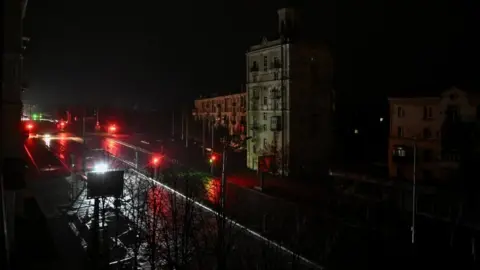
Damage included disruptions to power supplies in numerous neighborhoods during a harsh winter cold snap expected to hit temperatures of -15°C (5°F).
As Ukraine continues to respond, the cycle of targeting each other's energy infrastructure highlights the ongoing challenges posed by the conflict, affecting millions on both sides.