Ukraine is now living through its most difficult winter in recent memory. With January temperatures plummeting below -15C, Russia has been attacking energy infrastructure, leaving about a million Ukrainians without heating. The capital, Kyiv, is the main target of such attacks. Following the latest Russian bombardment overnight into 24 January, almost 6,000 apartment blocks were left without heating, according to mayor Vitaly Klitschko. This is the third such attack targeting Kyiv's heating infrastructure in little more than two weeks.
'Living in Kyiv is a bit of a gamble these days,' one resident of the Ukrainian capital, Rita, told the BBC. 'If you have heating and gas, there is no electricity and water. If you have electricity and water, there is no heating.' She says she has to go to bed wearing a hat and several layers of clothing.
What is making things much worse for Ukraine and easier for Russia is the widespread prevalence of apartment blocks that rely on communal central heating. Heating plants in Ukraine are huge, and many thousands of people are affected when they are targeted by Russian forces. Ukraine says that all such power plants have now been hit.
Such attacks disrupt electricity supplies, and while a generator might help in some cases, heating is less straightforward—especially when there is no electricity to power electric heaters.
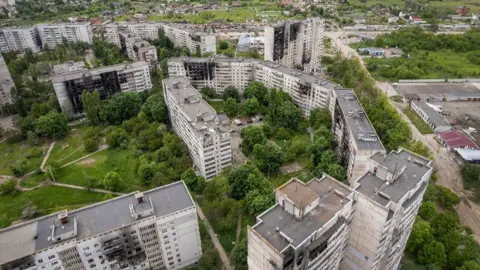
Before Russia's full-scale invasion of 2022, about 11 million households in Ukraine relied on central heating. Cities across the Soviet Union were home to massive construction programs in the 1950s that produced countless nine-story residential buildings, known as 'panelki', and smaller flats known as 'khrushchevki', named after Soviet leader Nikita Khrushchev. These houses were typically heated by large plants known as TETs, which generate both heat and electricity.
'Ukraine inherited the Soviet heating system and it hasn't changed anything; it stays predominantly centralized,' said energy expert Yuriy Korolchuk. He noted that the heating plants were not designed to withstand missile and drone attacks, exposing the vulnerabilities of this system during the current war. 'Large centralised installations bring about efficiencies of scale, but should they be targeted, the consequences can be devastating for hundreds of thousands of people.'
The Ukrainian government is aware of this vulnerability and is planning to reduce it by mandating individual heating points in apartment blocks. However, changing decades of Soviet-era urban planning will not be quick or easy.
'Living in Kyiv is a bit of a gamble these days,' one resident of the Ukrainian capital, Rita, told the BBC. 'If you have heating and gas, there is no electricity and water. If you have electricity and water, there is no heating.' She says she has to go to bed wearing a hat and several layers of clothing.
What is making things much worse for Ukraine and easier for Russia is the widespread prevalence of apartment blocks that rely on communal central heating. Heating plants in Ukraine are huge, and many thousands of people are affected when they are targeted by Russian forces. Ukraine says that all such power plants have now been hit.
Such attacks disrupt electricity supplies, and while a generator might help in some cases, heating is less straightforward—especially when there is no electricity to power electric heaters.
Before Russia's full-scale invasion of 2022, about 11 million households in Ukraine relied on central heating. Cities across the Soviet Union were home to massive construction programs in the 1950s that produced countless nine-story residential buildings, known as 'panelki', and smaller flats known as 'khrushchevki', named after Soviet leader Nikita Khrushchev. These houses were typically heated by large plants known as TETs, which generate both heat and electricity.
'Ukraine inherited the Soviet heating system and it hasn't changed anything; it stays predominantly centralized,' said energy expert Yuriy Korolchuk. He noted that the heating plants were not designed to withstand missile and drone attacks, exposing the vulnerabilities of this system during the current war. 'Large centralised installations bring about efficiencies of scale, but should they be targeted, the consequences can be devastating for hundreds of thousands of people.'
The Ukrainian government is aware of this vulnerability and is planning to reduce it by mandating individual heating points in apartment blocks. However, changing decades of Soviet-era urban planning will not be quick or easy.