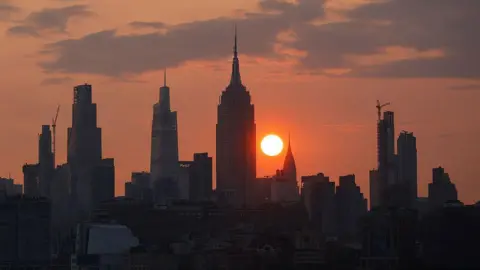
As deadly wildfires raged in the Canadian province of Manitoba this summer, Republican lawmakers in nearby US states penned letters asking that Canada be held accountable for the smoke drifting south. 'Our skies are being choked by wildfire smoke we didn't start and can't control,' wrote Calvin Callahan, a Republican state representative from Wisconsin. Along with colleagues from Iowa, Minnesota, and North Dakota, Callahan filed a formal complaint with the US Environmental Protection Agency (EPA) urging an investigation into Canada's wildfire management. Manitoba premier Wab Kinew quickly condemned the move, accusing lawmakers of throwing a 'timber tantrum' and playing political games.
As of August, the wildfires had scorched more than two million acres in Manitoba, caused thousands to evacuate, and claimed lives, raising the question: Could Canada do more to curb wildfires? However, experts suggest the answer is largely no, stating that unless the global community addresses climate change, similar issues will continue. They highlight that both Canada and the US are facing worsening wildfire seasons due to rising temperatures that create ideal conditions for wildfires.
Despite finger-pointing, experts argue that collaboration could yield better results. Recent data shows that Canadian wildfires have had deadly ramifications beyond its borders, impacting air quality and health across the globe. This year's fires alone contributed to severe health concerns, and legislation around emissions might need reevaluation—a shared responsibility between neighbors rather than a blame game.
In light of resources being stretched thin, both Canada and the US are looking at potential improvements to their firefighting systems. While some propose controlled burns and better forest management as solutions, experts stress the importance of addressing climate change at its core.
The ongoing discourse emphasizes that the focus should shift from blame to collaboration and adaptation to the new realities of wildfire smoke and climate. As climate change remains a looming threat, actions must target both mitigation and preparedness—because the smoke problem isn't going away anytime soon.
As of August, the wildfires had scorched more than two million acres in Manitoba, caused thousands to evacuate, and claimed lives, raising the question: Could Canada do more to curb wildfires? However, experts suggest the answer is largely no, stating that unless the global community addresses climate change, similar issues will continue. They highlight that both Canada and the US are facing worsening wildfire seasons due to rising temperatures that create ideal conditions for wildfires.
Despite finger-pointing, experts argue that collaboration could yield better results. Recent data shows that Canadian wildfires have had deadly ramifications beyond its borders, impacting air quality and health across the globe. This year's fires alone contributed to severe health concerns, and legislation around emissions might need reevaluation—a shared responsibility between neighbors rather than a blame game.
In light of resources being stretched thin, both Canada and the US are looking at potential improvements to their firefighting systems. While some propose controlled burns and better forest management as solutions, experts stress the importance of addressing climate change at its core.
The ongoing discourse emphasizes that the focus should shift from blame to collaboration and adaptation to the new realities of wildfire smoke and climate. As climate change remains a looming threat, actions must target both mitigation and preparedness—because the smoke problem isn't going away anytime soon.