In brief
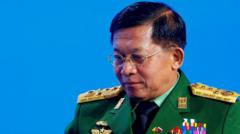
Myanmar's military leader Min Aung Hlaing is in China for a summit, marking a pivotal moment in Beijing's complex relationship with Nay Pyi Daw amid ongoing civil conflict and international scrutiny.
Myanmar's military leader, Min Aung Hlaing, has made his first trip to China since leading a coup that ousted the democratically elected government of Aung San Suu Kyi in February 2021. His regime faces mounting challenges, including significant losses against armed insurgents, raising concerns about his survival in power. China's invitation for this visit, albeit not a state visit, indicates its willingness to engage with Min Aung Hlaing as a key player in resolving Myanmar's ongoing crisis.Min Aung Hlaing arrived in Kunming, Yunnan, to attend a minor summit of Greater Mekong Sub-region countries, where he is leading a delegation of officials and business representatives. Despite isolation from international forums, this visit signifies China's strategic interest in supporting the military junta while exploring ways to stabilize the region, especially given the ongoing cross-border trade implications for Beijing.During the visit, he is expected to meet with Chinese Premier Li Qiang, amidst growing concerns from the opposition and the National Unity Government (NUG), which decries the recognition of the junta by China. NUG spokesperson Kyaw Zaw criticized the visit, stating, “Min Aung Hlaing and his group are destroying stability, peace, and economic growth,” voicing apprehension about the perception of China's government among the Burmese public.Faced with a challenging situation, where military effectiveness is diminishing and rising opposition remains against the coup, China is cautiously navigating its role. The civil conflict poses a direct threat to its investments and security along the border. While Beijing has attempted to rein in ethnic insurgents, it is also urging the junta to outline plans for a return to civilian rule in hopes of restoring economic stability.As Western diplomatic influence wanes in Myanmar, China appears poised to maintain its foothold and potentially broker a path towards peace—albeit one that aligns with its interests and supports the military regime's continuation.