In brief
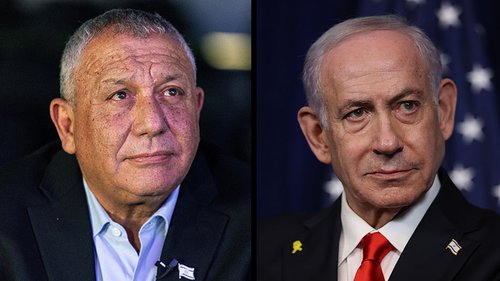
Prime Minister Benjamin Netanyahu’s coalition is leading with 53 seats but still 8 short of a 61‑seat majority in the 120‑member Knesset. Opposition led by former Chief of Staff Gadi Eisenkot holds 48 seats, while Arab parties Joint List and Ra’am together could secure a record 19 seats. The high voter turnout of 77.7% amid political uncertainty has triggered sharp stock‑market sell‑offs and a weaker shekel.
Israel’s 2026 parliamentary election has produced a fragmented result: Netanyahu’s right‑wing bloc is projected to win 53 seats, the opposition led by Gadi Eisenkot 48 seats, and Arab‑dominated Joint List and Ra’am could hold a record 19 seats, according to early tallies. The 120‑seat Knesset now lacks a clear majority.
Israel’s Central Elections Committee said 77.7% of eligible voters turned out, the highest rate since 1999, with nearly 80% of ballots counted by Wednesday. The final count, which will include special double‑envelope ballots, is expected by Thursday evening.
Gad Lior, a senior analyst at Yedioth Ahronoth, said the stock‑market fall was driven by political uncertainty. The Tel Aviv Stock Exchange’s TA‑35 index fell 1.81% and the TA‑125 fell 2.46%, while the shekel weakened 1.62% against the U.S. dollar.
Joseph Freiman, CEO of financial group Prico, explained that the shift in sentiment followed the vote‑counting progress, as Netanyahu’s bloc gradually took the lead, reversing earlier gains for the shekel.
Gadi Eisenkot posted on social media that “the preliminary poll results point to complete distrust in Netanyahu and the government of Oct. 7, of the Zionist majority and the majority of Israeli citizens.”
Netanyahu told supporters that his bloc held a decisive majority among the Jewish and Zionist public. He called Likud “the largest party in Israel” and said “we must establish a strong, right‑wing, national government.”
Mansour Abbas, leader of the Ra’am party, said, “With the numbers we have now, there is no government.”
Alon Pinkas, a former Israeli ambassador, told Al Jazeera that “there’s a price to pay” because “the Arabs can’t be kept outside and only being considered and co‑opted when you need their votes.”
President Isaac Herzog will consult party leaders on who should lead the next government. If no coalition forms, the Knesset could be dissolved and fresh elections called, leaving Netanyahu’s cabinet in caretaker mode until a new administration is agreed upon.