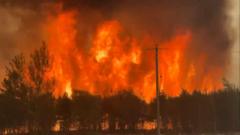
Wildfires in western Canada have turned into a critical crisis, prompting the use of military aircraft and helicopters for evacuating residents from Manitoba's endangered communities. Authorities have reported over 180 wildfires raging, resulting in the evacuation of thousands from Saskatchewan and Manitoba as hazardous weather is expected to continue.
The situation is most dire in the northern First Nations community of Pukatawagan, where more than 2,000 residents still need to be evacuated. Amidst the chaos, military forces and local wildfire teams are racing against time to ensure safety. In Flin Flon, a town with a population of 5,000, only firefighters are left behind.
As of now, Manitoba is grappling with 25 active wildfires, with 10 deemed uncontrollable. Meanwhile, Saskatchewan also battles 16 wildfires, of which seven remain uncontained. The Canadian Interagency Forest Fire Centre has categorized wildfire conditions in these provinces as extreme, raising the alarm further.
Meteorologist Danielle Desjardins warns that while a cold front is expected, it may not provide the hoped-for relief. The windy conditions alongside high temperatures can worsen the fire situation. The consequences of these fires extend beyond Canada, with around 22 million Americans facing air quality alerts due to drifting smoke.
Canada's wildfire season in 2023 has been the worst on record, burning over 42 million acres, with climate change exacerbating these conditions. As the battle against wildfires intensifies, the focus remains on safeguarding communities and mitigating the impacts of this ongoing crisis.