In brief
Farmers relying on the coffee industry for their livelihoods are experiencing a decline in quality and quantity due to changing weather patterns and increasing pests.
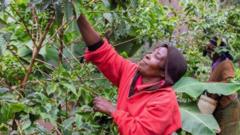
In the stunning highlands of Kenya’s Rift Valley, farmers such as Simon Macharia tend to their coffee plantations, renowned for some of the world’s best beans. Unfortunately, this "black gold" is under siege from climate change, which is disrupting growing conditions and reducing yields.With coffee prices largely benefiting international markets, local laborers like Edita Mwangi earn barely enough to survive, often working six days a week for a mere $1.40 a day. The price of a single cup in Europe starkly contrasts their daily wages, highlighting the exploitation within the trading system.As coffee trees require precise climates, including humidity and adequate rainfall, unpredictable weather significantly impacts coffee production. Farmers report reduced crop yields and increased plant diseases, prompting a reliance on harmful pesticides that further jeopardize soil and health.The effects are widespread; a survey reveals 93% of Kenyan coffee farmers feel climate change has altered their cultivation. With decreasing water supplies and rising temperatures, the traditional coffee belt is under threat, intensifying the pressure on one of Kenya's key employment sectors.To cope with these challenges, farmers are adopting innovative strategies, such as planting trees for shade, but concerns about the viability of future generations in coffee farming remain. With ongoing environmental shifts, the outlook for the coffee industry in Kenya appears increasingly precarious.