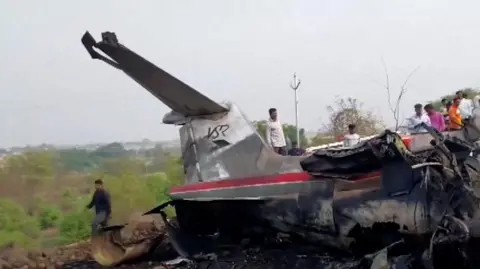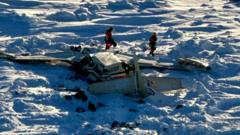
Crews are working diligently to recover the bodies of ten individuals who tragically lost their lives in a plane crash in Alaska. Jennifer Homendy, the chair of the National Transportation Safety Board (NTSB), mentioned that the investigation is still in its early phases, and it is too soon to determine the exact cause of the disaster. The Cessna Grand Caravan, operated by Bering Air, was en route from Unalakleet to Nome when it lost radar contact. Onboard were nine passengers and a pilot, and the incident occurred about 34 miles southeast of Nome, a small city on Alaska's west coast.
Among those who perished were two employees from the Alaska Native Tribal Health Consortium, Rhone Baumgartner and Kameron Hartvigson, who had been in Unalakleet for maintenance work on a water plant. During a news conference in Anchorage, Ms. Homendy confirmed that nine investigators are currently at the crash site, supported by specialists in Washington DC. Efforts to recover the victims are ongoing, although weather conditions are deteriorating. Concerns have been raised as the wreckage landed on a drifting ice floe, moving at five miles a day.
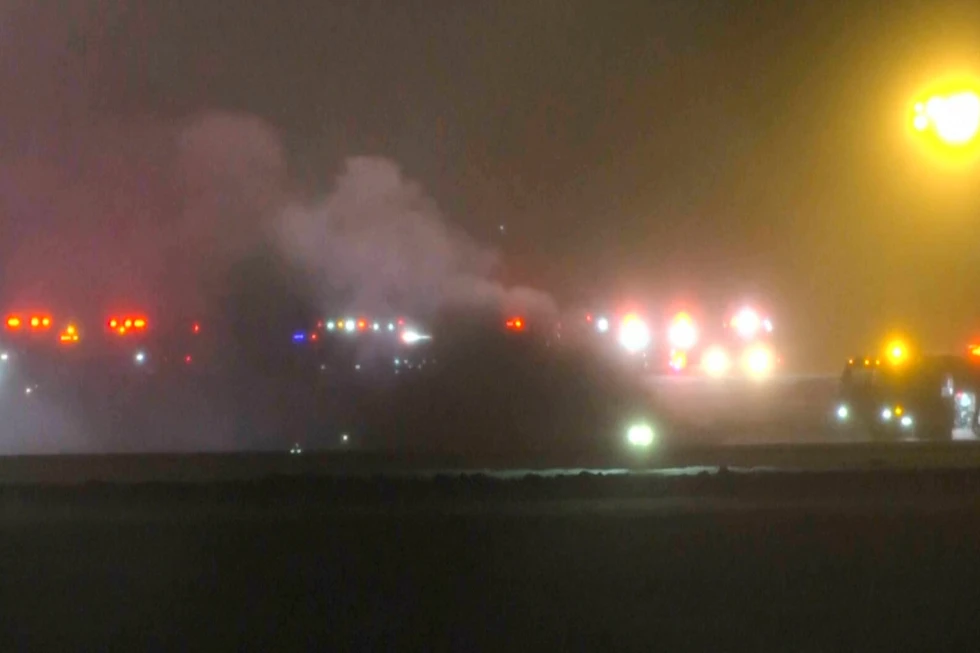
Bering Air expressed condolences and pledged cooperation with the ongoing investigation into the crash. Alaska State Troopers reported that they had been notified of the missing aircraft on Thursday afternoon. Reports indicated the pilot had communicated his intent to enter a holding pattern while waiting for the runway to be cleared. The US Coast Guard later stated that the plane had experienced a rapid descent before losing contact. Visibility in the area was low at the time of the crash, as highlighted by footage released.
Alaskan Senator Lisa Murkowski and Governor Mike Dunleavy extended their condolences, reflecting the strong community ties in Alaska during such tragic events. The distance between Unalakleet and Nome is approximately 150 miles across the Norton Sound, a significant expanse of water separating the two locations.